
Reviewed · WALKING TOURS
World War II Malta Full-Day Walking Tour
Malta’s World War II story comes alive underground, in command rooms and air shelters where civilians and military leaders faced the Siege of Malta. This tour links those wartime sites with Valletta’s gates, squares, memorials, and harbor views, then explains how Malta helped direct the 1943 invasion of Sicily from the Lascaris War Rooms.
I like the air shelter visit, which gives you a physical sense of how people survived bombing, and the stop at the Siege Bell, where the harbor setting adds weight to the names and numbers behind the story. The price of $71 also covers transport, a local guide, and admissions to key sites.
The main drawback is pace. Seven hours sounds generous, but the day covers two historic cities and several major stops. You may leave wishing you had more time inside the shelters, Fort St Elmo, or the war rooms. Bring good walking shoes, and do not expect lunch to be included.
Key points to know before booking
- The underground sites are the heart of the day: You visit wartime air shelters and the Lascaris War Rooms, where Malta’s air defense and major Mediterranean operations were directed.
- Valletta’s public spaces carry wartime meaning: See the Royal Opera House site, St. George’s Square, Victoria Gate, the Santa Marija Memorial, and other reminders of the siege.
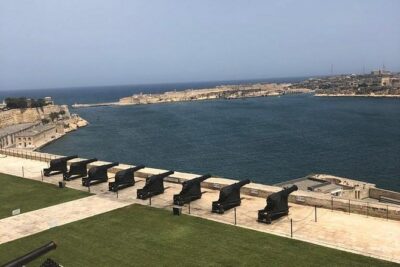
- The Siege Bell gives you the clearest harbor view: Upper Barracca Garden and the bell overlook the Great Harbor and connect the city’s beauty with its wartime losses.
- The guide adds the historical framework: This is an English-language tour led by a licensed local guide, with hotel pickup and drop-off or collection from a nearby point.
- The schedule favors coverage over depth: You see a lot in one day, but some stops can feel short, especially if you want time to explore every corner.
- It suits independent-minded beginners: You get an organized introduction to Malta’s WWII story without having to arrange transport between Vittoriosa and Valletta.
Why Malta mattered so much in World War II
Malta sits in the central Mediterranean, and during World War II that position made it far more than a pleasant island port. British aircraft and naval forces based here could attack Axis ships carrying fuel, equipment, and troops from Europe to North Africa.
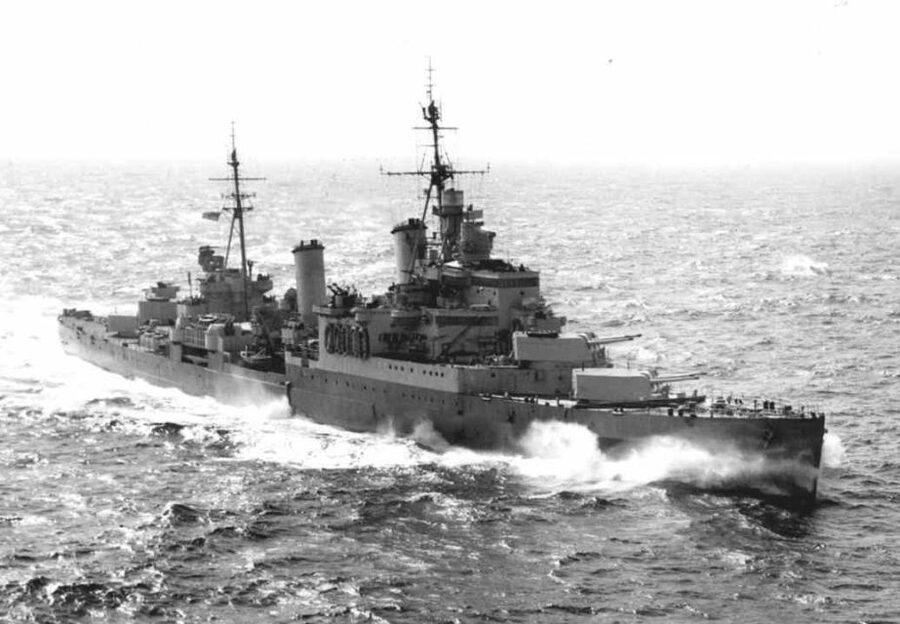
When fighting opened in North Africa in 1940, Malta became a major target. Italian and German forces tried to weaken the island, while the Royal Air Force and Royal Navy worked to keep it supplied and operational. The siege lasted from 1940 to 1942, bringing severe bombing, food shortages, and heavy military and civilian losses.
Your guide sets up this story before taking you through the sites. That context matters because many of Valletta’s monuments can look like ordinary city sights if you do not know what happened around them. The old gates, bombed opera house, shelter tunnels, and harbor memorials form one connected story.
The tour also touches on Malta’s British period, so you get more than a battle timeline. You learn how the island functioned as a military base, how civilians coped with shortages, and how senior Allied commanders used Malta during later operations.
More Walking Tours in Valletta
- The Original Valletta Walking Tour
★ 5.0 · 2,719 reviews - Valletta: 3-Hour Walking Tour
★ 4.7 · 1,605 reviews - Valletta: Guided City Walking Tour
★ 4.8 · 1,256 reviews
Vittoriosa and the first steps into wartime Malta
The day includes Vittoriosa, one of the historic harbor cities opposite Valletta. The supplied details do not set out every stop in Vittoriosa, so you should think of this portion as a guided introduction rather than a fully separate walking tour of every street and monument.
Its value is geographical. From this side of the harbor, you begin to understand why Malta’s ports mattered to the British military. The island’s harbors supported ships, aircraft, command posts, and supply work, while also exposing the surrounding cities to attack.
A guide can make this setting easier to read than a map can. You are not only looking at old stone buildings. You are learning how the harbor connected military movement, civilian life, and the wider Mediterranean campaign.
The day then moves toward Valletta, where the wartime story becomes more visible in memorials and public spaces. Hotel pickup and drop-off are included, or you may be collected from the nearest practical point. Your exact pickup time is confirmed by the local supplier one day before the tour, so keep that morning flexible.
Valletta’s Land Front and the Royal Opera House site
In Valletta, the route reaches Porta Reale, the curtain wall at the center of the city’s Land Front. This is a useful place to discuss how Valletta was defended and how the city’s monumental entrance fit into a working military town.
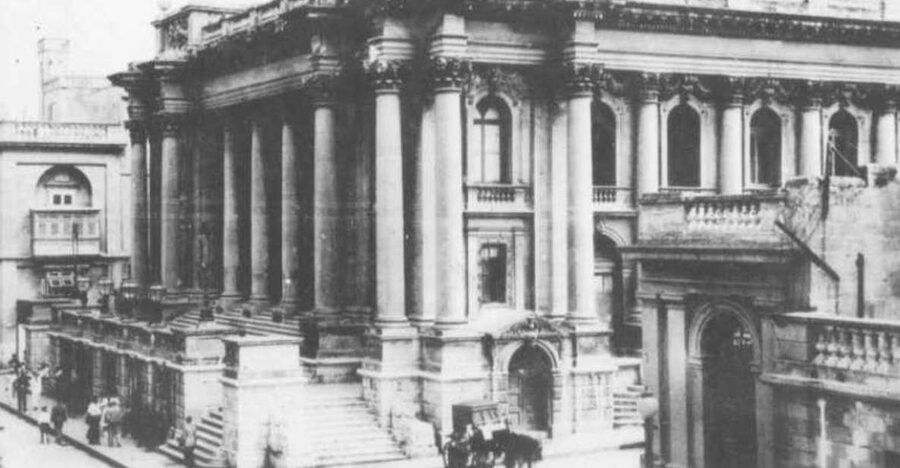
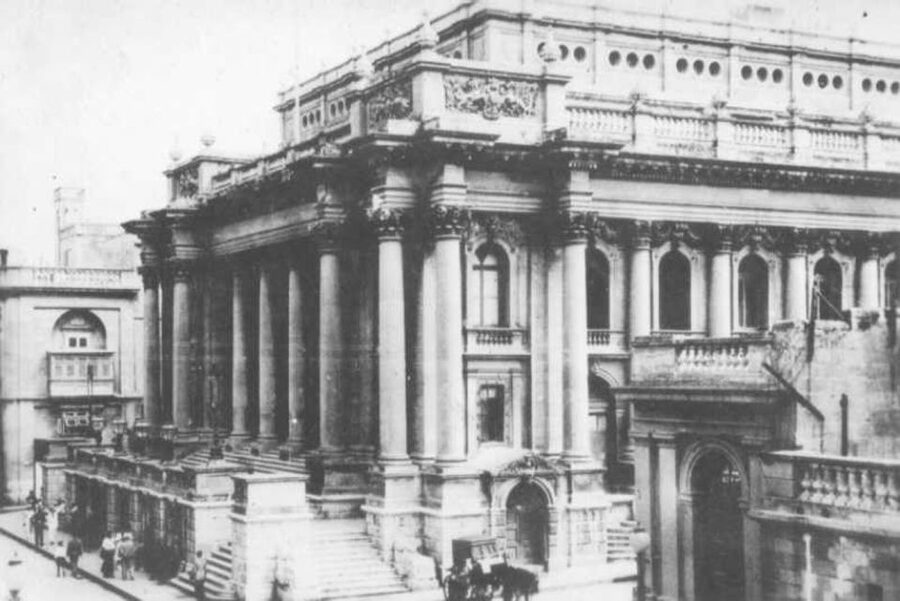
From there, you continue to Pjazza Teatru Irjal, where the former Royal Opera House was badly bombed in 1942. The open ruins and modern use of the site make the damage easy to miss if you walk past without explanation. On this tour, the stop helps you picture how deeply the bombing affected the heart of the capital.
The route also passes along Strada Stretta and reaches Misrah San Gorg, or St. George’s Square. The square is tied to the George Cross awarded to Malta in 1942 for the courage shown during the siege. That award is not just a decorative detail. It reflects the island’s civilian endurance under repeated attacks and shortages.
You then see the Queen Victoria statue in Republic Square. These stops may feel like a quick sweep through central Valletta, but they help place British rule, public honors, and wartime memory within the everyday city.
Air shelters and the practical reality of civilian survival
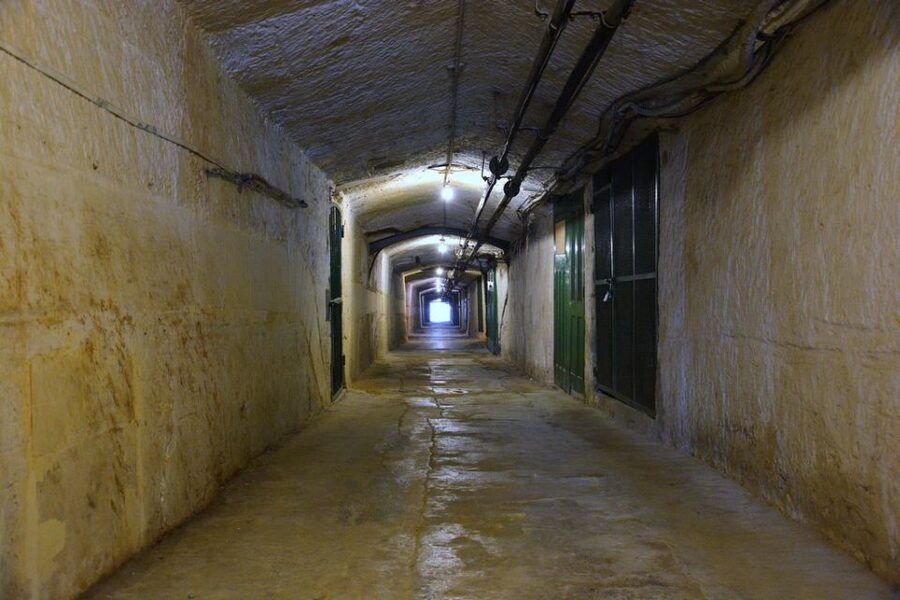
The air raid shelters are one of the strongest reasons to choose this tour. You go below street level and see the type of underground spaces used during bombing. The setting shifts the subject from aircraft and commanders to the people who had to leave their homes and find protection beneath the city.
The shelter experience is particularly useful if you prefer history you can physically walk through. A date or statistic can fade quickly. Narrow passages and underground rooms give you a clearer sense of how wartime life was organized.
Time may be the issue here. The schedule has several major sites, and you may see only part of a larger underground complex before moving on. One guide working in the tunnels is described as very informative, but the visit can still feel brief if you want to study every section.
The tour also explains Victory Kitchens, community kitchens created to reduce food waste during a period of serious shortage. This is a small but revealing part of the story. War affected Malta not only through bombs, but also through rationing, supply problems, and the daily work of making limited food go further.
Other guided walks around Valletta:
- Valletta: Street Food and Culture Walking Tour
★ 4.8 · 1,251 reviews - Valletta: City Walking Tour in a Small Group
★ 4.9 · 957 reviews - Valletta: Maltese Food and Drink Guided Walking Tour
★ 4.7 · 601 reviews - Valletta City Walking Tour
★ 5.0 · 395 reviews
Victoria Gate and the Santa Marija Memorial
Victoria Gate was built on the site of the older Del Monte Gate. The stop adds another layer to Valletta’s changing defenses and shows how the city’s entrances have been reshaped over time.
Nearby, the anchor-shaped Santa Marija Memorial honors sailors lost during Operation Pedestal. That operation was a major effort to get supplies through to Malta, and the memorial points to the dangerous sea routes that kept the island alive.
This is where the tour widens beyond air raids. Malta’s war was fought in the sky, on land, and at sea. The harbor was both a lifeline and a target, and the people remembered here were part of the supply effort that made continued resistance possible.
The memorial stops are short, but they are valuable if you take a moment to read the symbols and listen to the explanation. The guide’s role is important because the meaning of an anchor, a gate, or a square is not always obvious from the object alone.
Upper Barracca Garden and the Siege Bell
Upper Barracca Garden is one of the day’s most scenic stops. You look across the Great Harbor, with the water and fortified cities spread below. The gardens also contain statues of Winston Churchill and other prominent figures connected with Malta’s political and military story.
Then comes the Siege Bell Memorial, overlooking Valletta Harbor. Built in 1992, it honors the 7,000 people who died during the Siege of Malta. The setting is calm, but the number gives the view a more serious purpose.
I like this stop because it does not separate beauty from loss. Malta’s harbor is one of the most attractive scenes in the country, yet it was also a place of military danger, supply convoys, and civilian fear. You have time to pause, look across the water, and connect the city’s physical setting with the campaign being discussed.
If you enjoy photography, this is likely one of the best points of the day. Still, the tour is not designed as a long scenic break. The stop serves the history first, with the panorama as a strong bonus.
Lascaris War Rooms and the Allied command center
The Lascaris War Rooms give the tour its clearest military command angle. This underground complex housed Malta’s air defense operations and helped coordinate major naval actions in the Mediterranean.
The site also links Malta to the Allied invasion of Sicily in 1943. General Eisenhower and senior commanders including Admiral Cunningham, Field Marshal Montgomery, and Air Marshal Tedder directed the operation from here. That connection makes the war rooms important far beyond Malta’s own defense.
You should expect the museum portion to be partly self-guided. The guide may explain the wider setting and lead you into the site, but you are not necessarily accompanied through every room. That arrangement gives you some freedom, though it also means the final museum visit can feel less personal than the walking sections.
The war rooms are best for you if you enjoy maps, planning, command structures, and the practical side of military history. If your interest is mainly civilian life, the air shelters and memorials may leave the stronger impression.
Fort St Elmo and the Malta War Museum
Fort St Elmo is another key stop, with entrance included in the experience. The fort adds a defensive and military setting to a day otherwise shaped by streets, gardens, shelters, and memorials.
The Malta War Museum is included as well. It helps gather the day’s separate threads into a wider account of Malta’s wartime role and British military history. The museum visit is self-guided, so you can spend your time on the displays that match your interests, but the overall schedule may limit how long you have.
This is a point worth considering before you book. The tour gives you access to several places that would take planning to connect on your own, but it cannot give every location a full museum visit. If you want to read every panel and examine every room, you may prefer to return independently later.
How much walking and time should you expect?
The experience lasts about seven hours and combines transport with substantial walking in Vittoriosa and Valletta. You move through streets, public squares, gardens, memorial areas, and underground sites, so comfortable shoes are essential.
The route is not suitable for people with mobility impairments. Underground shelters and historic military sites can be difficult to navigate, and the day has enough stops that a slower pace may be hard to maintain.
The schedule also includes some free time in Valletta. That sounds generous, but you need to use it carefully. If you stop for food, allow enough time to eat and return to the meeting point. Lunch is not included, and a rushed café stop can make the middle of the day feel tighter.
One practical complaint is that guides can be difficult to hear when explaining things away from the vehicle. A portable microphone would help, especially in a group. Stay close to the guide during outdoor explanations and ask for a repeat if you miss a point.
Is $71 good value for this Malta history tour?
At $71 per person, the tour offers reasonable value if you want transport, structure, and several admissions in one day. Hotel pickup and drop-off reduce the need to work out connections between sites, while the licensed English-speaking guide provides the historical thread.
The price is less attractive if you already know Valletta well, can arrange transport easily, and prefer long visits at individual museums. Going independently may give you more control over timing, particularly at the tunnels, fort, and war museum.
For a first visit, the convenience matters. Malta’s WWII sites are spread across different parts of the historic area, and the tour helps you see the main ones without building your own route. You are paying partly for the guide’s interpretation and partly for the day’s organization.
The strongest value comes when you treat this as an introduction. Use it to learn what interests you, then return to a favorite site for a slower visit.
Who should book this walking tour?
I would recommend it to you if you want a clear introduction to Malta’s World War II story, especially if you are unsure about arranging transport or visiting the island’s historic areas alone. It also suits solo visitors and people staying at a resort who want a planned day beyond the hotel area.
You should book it if underground shelters, wartime command centers, military memorials, and British history appeal to you. The mix of indoor sites and outdoor views keeps the subject from becoming one long museum visit.
I would hesitate if your top priority is detailed exploration. The tour covers a lot, and the shelter and fort visits may feel too short. It is also not the best choice for anyone with mobility limitations or anyone who dislikes a full day of walking.
FAQ
How long does the World War II Malta Full-Day Walking Tour last?
The tour lasts seven hours.
What language is the tour conducted in?
The live tour guide speaks English.
Which places in Malta does the tour visit?
The tour visits Vittoriosa and Valletta, including air raid shelters, Fort St Elmo, the Lascaris War Rooms, Upper Barracca Garden, the Siege Bell Memorial, Victoria Gate, and several war memorials.
Are entrance tickets included?
Yes. Entrance to the air raid shelters and Malta War Museum is included. The tour information also states that entry to Fort St Elmo is included.
Is lunch included?
No. Lunch is not included, so you should plan to buy food during the day.
Does the tour include hotel pickup?
Yes. Pickup and drop-off at your hotel or a nearby pickup point are included.
When will I know my pickup time?
The local supplier confirms your pickup time one day before the tour.
Can I cancel the booking for a full refund?
You can cancel up to 24 hours in advance for a full refund.
Is the tour suitable for people with mobility impairments?
No. The tour is not suitable for people with mobility impairments, and comfortable walking shoes are recommended.
Should you book it?
Book this tour if you want the main WWII story in one organized day, with the air shelters, war rooms, memorials, Fort St Elmo, and Valletta’s harbor views all connected by a guide. At $71, it is a practical choice for a first look at Malta’s wartime past.
Skip it if you want to linger at each site, explore the tunnels in depth, or build a slower museum-focused day on your own. The tour’s strength is its wide coverage and historical context. Its weakness is the limited time at some of the places you may find most compelling.
More full days out of Valletta
- From Malta: Full-Day Gozo UTV Tour with Lunch and Boat Ride
★ 4.6 · 4,408 reviews - From Malta: Full-Day Gozo Quad Tour with Lunch and Boat Ride
★ 4.8 · 1,419 reviews - Gozo Full-Day Jeep Tour with Private Boat to Gozo & return
★ 4.5 · 1,048 reviews - Malta: Full-Day Gozo Buggy Tour with Lunch & Boat Ride
★ 4.7 · 610 reviews
Just added in Valletta
- Malta: 5 hr Vintage Bus Tour – Mdina & Blue Grotto inc. food★ 5.0 · 22 reviews
- Valletta: Private Maltese Cuisine Walking Tour★ 4.8 · 8 reviews
- Valletta : Highlights & Hidden Gems Walking Tour★ 3.1 · 5 reviews
- Valletta & Mdina: Private Tour★ 4.5 · 16 reviews
- Afternoon Harbours Cruise with Guide and Roundtrip Transfers★ 3.4 · 11 reviews
- Valletta: Food and Culture Private Tour★ 4.9 · 10 reviews
- Valletta: Guided Walking Tour★ 3.8 · 5 reviews
- Valletta Aperol Spritz Aperitivo Experience★ 4.6 · 27 reviews
Walking Tours, compared.


Guided Walking Tour with Optional Cathedral Tour
Read our review →
Browse the lists this tour appears in