
Reviewed · MALTA
The Good Friday Procession: Afternoon Tour in Zejtun
Good Friday in Zejtun is not a quick photo stop. It is a solemn public ceremony, with life-size statues of Christ’s Passion moving through the streets, followed by people dressed as Old Testament figures. Your reserved seat puts you close to the action, while the coach handles the difficult job of reaching a crowded town on one of Malta’s biggest religious days.
I like the reserved seat, which gives you a fixed place in a packed setting. I also like the included transport, since finding a parking space or navigating public transport around the procession can be a headache. The main catch is that this feels more like organized transport plus a seat than a fully narrated walking tour.
The procession itself can be fascinating even if you are not religious. Still, you should not expect continuous explanations during the ceremony, and people standing around the seating area may block your view. The pickup plan also requires attention, especially at the end, when things can become a little untidy.
Key points to know before booking
- Five hours in Zejtun: The afternoon schedule gives you time for transfers, the walk to the seating area, and the procession.
- A solemn Maltese tradition: Good Friday, known locally as Il-Gimgha l-Kbira, is a day of public mourning and religious pageantry.
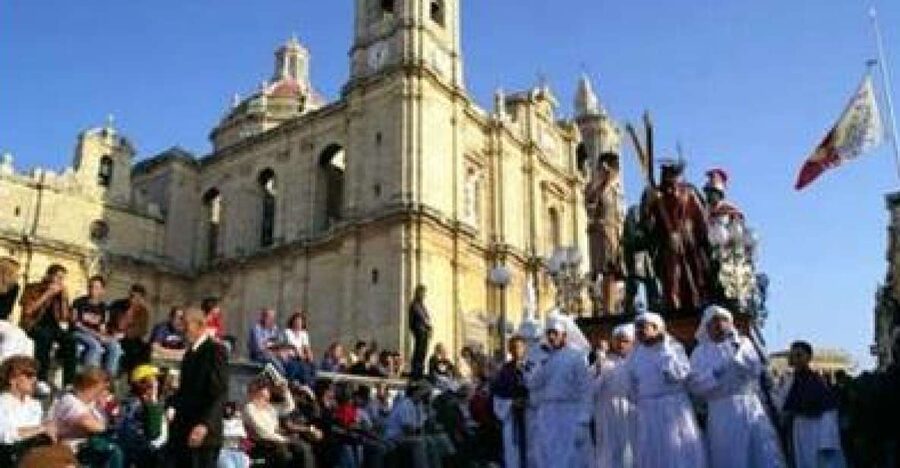
- Life-size Passion statues: The central procession uses large figures to present the suffering and death of Christ.
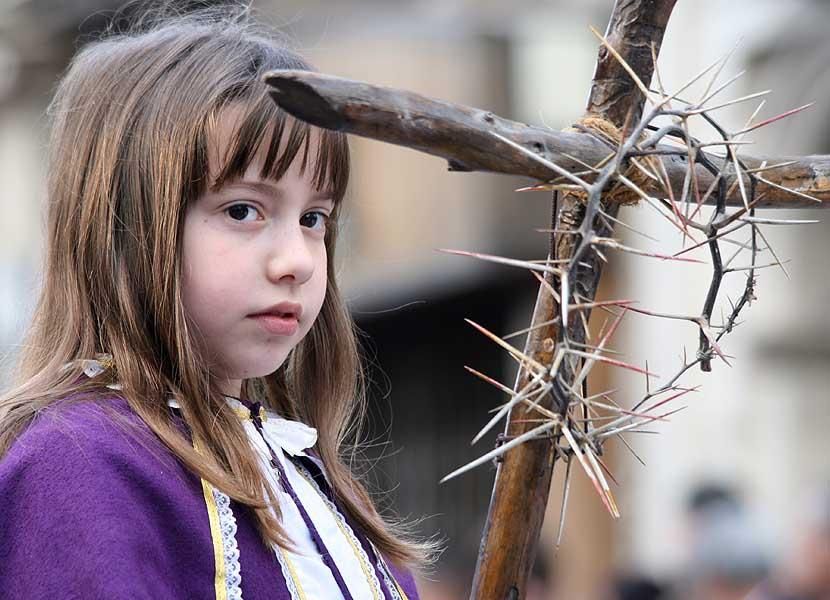
- Old Testament scenes: Participants in period costumes follow the statues and act out biblical stories.
- Reserved seating included: You do not need to stand for the whole event, though the area around the seats may remain open to standing spectators.
- Guide support is practical: A guide such as Mario may help you stay with the group and find the seats, but the ceremony is not continuously interpreted.
Why Good Friday matters in Malta
Malta takes Good Friday seriously. In Maltese, Il-Gimgha l-Kbira means the most important Friday of the year, and the day is marked by community mourning rather than by the festive mood associated with Easter Sunday.
During the afternoon, towns and villages become open-air stages. Religious statues move through the streets, and people in costumes recreate scenes from the Old Testament and the Passion of Christ. The result is part procession, part theatre, and part community gathering.
You do not need to be a churchgoer to appreciate the scale of the event. The statues are large and carefully presented, the costumes give the procession a visual story, and thousands of local people gather to watch. You are seeing a living Maltese tradition rather than a performance created mainly for tourists.
That context matters. If you approach the afternoon as a standard sightseeing tour, you may find the limited commentary frustrating. If you see it as a chance to observe a major local ceremony, the quiet, solemn tone makes more sense.
Other trips people book in Malta:
- Malta: Gozo & Comino Islands, Blue Lagoon & Seacaves Tour
★ 4.5 · 15,672 reviews - Comino: Blue Lagoon, Crystal Lagoon, and Seacaves Tour
★ 4.6 · 5,673 reviews - Malta: Blue Lagoon, Beaches & Bays Trip by Catamaran
★ 4.7 · 5,496 reviews
Arriving in Zejtun by coach
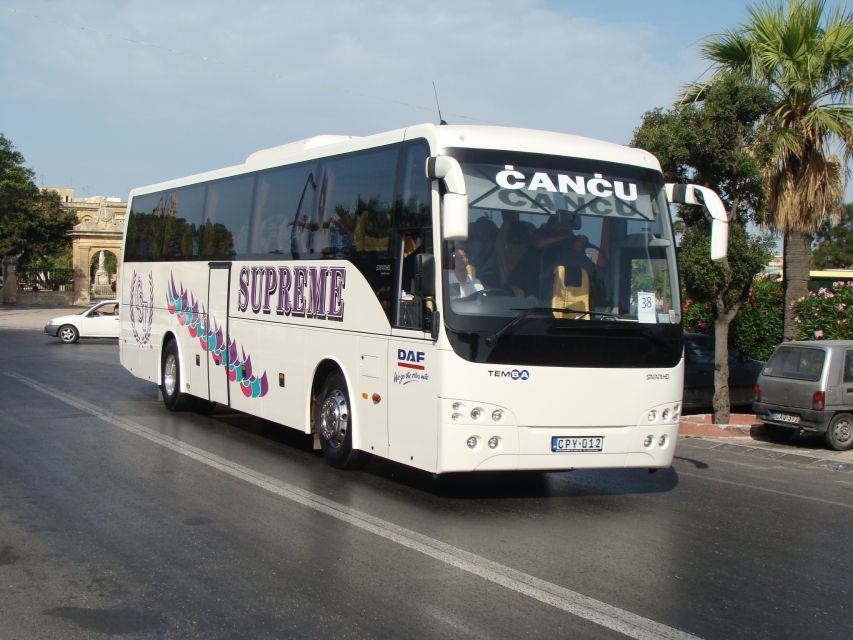
The tour includes pickup from your hotel or a nearby meeting point. If hotel pickup is arranged, wait at the main entrance rather than inside reception. The exact pickup point and time are confirmed by email one day before, so read that message carefully.
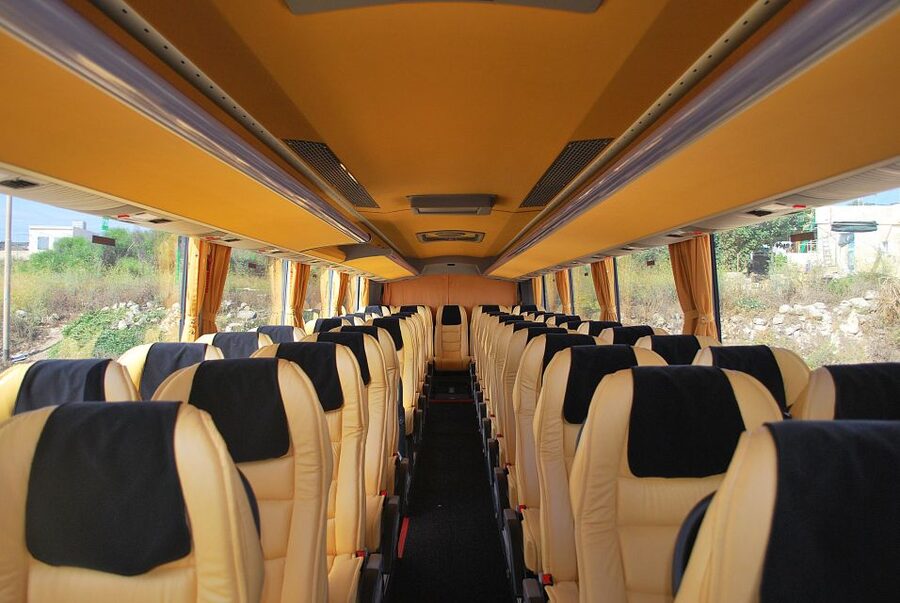
The air-conditioned coach is one of the strongest practical reasons to book. On Good Friday, the streets near the procession can become very crowded, and parking in Zejtun may be difficult. A private car gives you more independence, but it also leaves you responsible for finding a legal space and reaching the seating area on time.
Public transport may also be possible, but this tour removes some of the uncertainty. You do not need to work out the route, locate the procession alone, or guess where the group will meet afterward. For a visitor unfamiliar with Malta, that convenience can be worth a good part of the $33 price.
The five-hour duration includes the travel and event time. Exact starting times vary, so you need to check availability for your date. Good Friday is a single annual occasion, and schedules are tied to the ceremony rather than to a normal daily tour timetable.
The walk from the bus to the seats
After the coach reaches the area, expect a short walk to the reserved seating. The guide helps the group stay together and find the right place. One guide named Mario has been especially helpful with this part, offering small bits of information about the village and procession along the way.
That may sound minor, but it matters in a crowded town. A short walk can feel confusing when roads are full of people and the group is spreading out. Keep an eye on the guide, remember the meeting instructions, and do not wander off for a quick photo without knowing where to return.
The tour provides an individual seat, which is a real comfort during a five-hour afternoon outing. Good Friday processions can take time to pass, and standing on pavement for the whole event would make the experience less pleasant.
There is one important limitation. The reserved seating is not fully enclosed or protected from surrounding spectators. People may stand in front of or beside the seats, which can obstruct your view for parts of the procession. Your seat is still useful, but it is not a guaranteed clear view from every angle.
Watching the Passion statues pass
The main visual focus is the series of life-size statues depicting the Passion of Christ. These figures present the suffering and death of Christ in a form that can be understood from a distance, even in a large crowd.
The statues give the ceremony its slow, serious rhythm. This is not a fast parade with music and bright floats. It is a religious procession built around mourning, reflection, and the physical retelling of a familiar biblical story.
From your seat, you can watch the figures move through the street instead of trying to keep pace with them. That fixed position makes photography and observation easier, although standing spectators may still interfere with your view.
A useful tip is to keep your expectations realistic. The experience provides access to the procession, not a museum-style presentation of each statue. If you want detailed information about every scene, you may need to do some reading before Good Friday or ask the guide what is possible before the procession begins.
Same island, a different sort of day:
- Malta: Gozo, Comino, Blue & Crystal Lagoon, & Caves Cruise
★ 4.6 · 5,092 reviews - From Malta: Full-Day Gozo UTV Tour with Lunch and Boat Ride
★ 4.6 · 4,408 reviews - From Sliema: Comino, Crystal Lagoon, and Blue Lagoon Cruise
★ 4.5 · 3,792 reviews - From Sliema: Gozo, Comino and Blue Lagoon Cruise
★ 4.5 · 3,461 reviews
Old Testament characters bring the story to life
After the statues, participants in costumes re-enact Old Testament scenes. This gives the afternoon a wider biblical story, moving beyond the Passion itself and presenting a sequence of characters and events for the crowd to follow.
The costumes are an important part of the appeal. You are not simply watching statues pass through the street. You are also seeing local participants take part in a community tradition that combines religious devotion with careful public presentation.
The Old Testament scenes can be harder to follow without context. The tour description presents the scenes, but the live portion is not guaranteed to include detailed commentary as each character appears. If biblical stories are unfamiliar to you, you may recognize the broad themes without knowing every figure.
That is not necessarily a flaw. Much of the ceremony is meant to be experienced by watching and reflecting, not by listening to a running tour lecture. Still, it explains why some visitors describe the service as transport, seating, and access rather than a traditional guided tour.
How much guiding should you expect?
The activity includes a live guide in English, German, French, or Italian. In practice, the guide’s most dependable role is likely to be meeting the group, managing the transfer, leading you to the seats, and explaining a few local details before the ceremony.
Mario, named by one participant, helped the group make the short walk from the bus to the seating area without getting lost. He also shared occasional information about Zejtun and the procession on the way. That kind of support is useful, especially if you are worried about missing the meeting point.
Do not book this expecting a guide to stand beside you and explain every moment of the procession. The ceremony itself is mainly something you watch. This distinction is important because the phrase guided tour can suggest more interpretation than the afternoon may actually provide.
For me, the arrangement makes sense for visitors who value logistics more than lectures. You get help reaching the event and a place to sit. If your main goal is religious or historical explanation, you may find the experience too light on commentary.
The value of $33
At $33 per person, the price is reasonable if you need transport and want a reserved seat. Getting to Zejtun on your own may cost less, especially if you already have a car or feel comfortable using public transport. But independent visitors must handle the parking, crowds, route planning, and meeting arrangements themselves.
The seat is the key part of the value. You are not paying only for a bus ride. You are also paying for a place set aside for you during a long and popular public event. That matters on a day when the streets can fill with local spectators.
The value is weaker if you are already staying nearby and can easily reach the procession. One German-speaking participant felt the booking was mainly a bus service and a seat, and noted that people using public transport or a rental car could attend without it.
That is fair. This is not the cheapest way to see the procession. It is a convenience purchase, designed to reduce the stress of reaching Zejtun and finding your place. For many visitors, that is exactly the point.
Weather, clothing, and the five-hour schedule
Wear comfortable shoes. You will need them for the walk between the coach and the seating area, and you may spend a long time sitting or standing around before and during the ceremony.
Check the weather before you leave and dress for the conditions. A warning about the weather would be useful when planning this outing, since the seating area is not described as fully protected. Bring suitable clothing for the afternoon rather than assuming Malta will be warm and dry.
The tour does not include dinner. Plan to eat before or after the activity, especially if your pickup is early or your return is later than expected. No meal stop is included in the five-hour arrangement.
The schedule may feel long if you want only a quick look at the procession. It works better for people who are prepared to give the event an entire afternoon and accept some waiting time as part of attending a major public ceremony.
What can go wrong at the end?
The return meeting is the part that deserves the most attention. The crowded setting can make the end feel chaotic, so listen closely to the guide and confirm where the coach will be waiting before you leave the seating area.
Do not assume that everyone will naturally move together once the procession finishes. Keep your phone charged, note the coach location if instructions allow it, and stay near the group. The tour reduces the problem of getting to Zejtun, but it cannot remove the crowds once thousands of people are leaving at the same time.
This is also where the practical value of the guide becomes clear. Even when there is little commentary during the ceremony, a guide who keeps people together can make the return less stressful.
Who will enjoy this Zejtun afternoon?
I would recommend this outing to a first-time Malta visitor who wants to see Good Friday without handling every transport detail alone. It suits you especially well if a reserved seat sounds more appealing than standing in a dense crowd.
It also works for people interested in religious traditions, local ceremonies, costumes, and public pageantry. You will get the most from it if you are happy to observe quietly rather than expecting an active, lecture-filled tour.
Families and older visitors may appreciate the seating and coach transfer, though the walking distance and crowd conditions should still be kept in mind. Comfortable shoes are essential.
I would hesitate to recommend it to someone already staying near Zejtun who has easy transport and wants a detailed historical explanation. You may be better off attending independently and using your own guidebook or research for context.
Should you book the Good Friday Procession tour?
Book it if you want a simple way to reach Zejtun, a reserved seat, and practical support in a crowded setting. The Passion statues, Old Testament costumes, and strong local participation make this a memorable afternoon, and $33 is fair when the transport and seating solve real problems.
Skip it if you expect a fully narrated tour or guaranteed protection from people standing around your seat. The ceremony is the star, while the guide mainly handles logistics and offers some background before the procession.
For the best experience, read the pickup email, wait at the hotel’s main door, wear comfortable shoes, prepare for the weather, and pay close attention to the return meeting point. Go with the right expectations, and this offers a respectful look at one of Malta’s most important annual traditions.
FAQ
Where does the Good Friday procession tour take place?
The tour takes place in Zejtun, Malta. The afternoon centers on the local Good Friday procession.
How long does the activity last?
The activity lasts five hours. Starting times vary, so check availability for your chosen date.
Is transportation included?
Yes. Pickup from your hotel or the nearest meeting point is included, along with an air-conditioned coach.
Is a seat included at the procession?
Yes. Each participant receives a seat at the procession. The seating area is not fully protected from people standing nearby, so your view may sometimes be blocked.
Is dinner included?
No. Dinner is not included, so plan your meal separately.
What languages are available for the guide?
The guide service is available in German, English, French, and Italian. The guide provides practical assistance and some information, but the procession itself may not receive continuous live commentary.
Just added in Malta
- World War II Malta Full-Day Walking Tour★ 4.3 · 18 reviews
- Gozo: Wine Tasting and Paired Dinner Experience★ 4.9 · 43 reviews
- Victoria, Gozo: Sunset Walking Food and Drink Tour★ 5.0 · 6 reviews
- Wakeboarding Adventure in Malta: Learn to Ride★ 5.0 · 4 reviews
- Malta: 5 hr Vintage Bus Tour – Mdina & Blue Grotto inc. food★ 5.0 · 22 reviews
- Valletta: Private Maltese Cuisine Walking Tour★ 4.8 · 8 reviews
- Valletta: Private Massage from a world renowned masseuse★ 4.6 · 9 reviews
- Valletta Street Food & History Tour With Private Transfers★ 4.5 · 15 reviews