
Reviewed · MDINA & RABAT TOURS
Best of Mdina and Rabat Walking Tour
Mdina’s stone streets can make you feel as if the modern world has been switched off. This two-hour walk takes you from the city gate through grand palaces, quiet squares, church-fronted streets, and into neighboring Rabat, giving you a useful first look at two of Malta’s most atmospheric towns. The medieval setting is the real star.
I like the compact route and the way it combines Mdina’s formal beauty with Rabat’s quieter, more ordinary streets. I also like the guide’s practical role: Nadine, for example, has helped visitors choose what to see after the walk, not just recited dates. At $24.10, the tour offers a sensible introduction without adding entrance fees to the cost.
The main caution is group size and sound quality. The tour can reach 20 people, and one attendee found there were not enough headsets for everyone. At the crowded Mdina Gate, traffic, buses, children, and other groups can make it hard to hear, especially if you have hearing difficulties.
Key points before you book
- Mdina Gate is the meeting point: Look for the guide holding a City Walking Tours red umbrella.
- The route covers two towns: You walk through Mdina and continue into Rabat, ending near St Paul’s Basilica.
- The tour is mostly an orientation walk: Entry to museums and churches is not included.
- Pjazza Mesquita has a film connection: The quiet square was used as a filming location for Game of Thrones.
- The guide adds local context: You get stories, historical background, and suggestions for what to do after the walk.
- Hearing equipment may matter: Ask about a headset at the start, particularly if you need clear audio.
Why this short Mdina and Rabat walk works
Mdina and Rabat sit close together, but they offer different moods. Mdina feels carefully preserved and ceremonial, with palaces and narrow streets inside its old walls. Rabat feels more like a lived-in Maltese town, with a quieter, more rural character.
That contrast gives this tour a useful shape. You do not spend the full two hours looking at grand facades. You begin with Mdina’s historic center, then shift into Rabat, where the streets feel less formal and the pace becomes more relaxed.
The route is also efficient. In two hours, you see several major locations without spending the whole day on a guided program. If you are visiting Malta for a short break, this can help you get your bearings before returning to places that deserve more time.
You should think of the experience as a guided introduction rather than a museum tour. The walk includes no admission tickets, so the guide explains what you are seeing from the outside and helps you decide which churches, palaces, or museums you may want to enter later.
Other trips into the old capital from Malta:
- Malta: Highlights of Malta & Mdina Full Day Tour with Lunch
★ 4.4 · 2,688 reviews - Malta: Mdina and Rabat Walking Tour with Catacombs
★ 4.8 · 1,126 reviews - Malta: Mdina, Dingli Cliffs and San Anton Botanical Gardens
★ 4.3 · 991 reviews
Meeting at Mdina Gate with the red umbrella
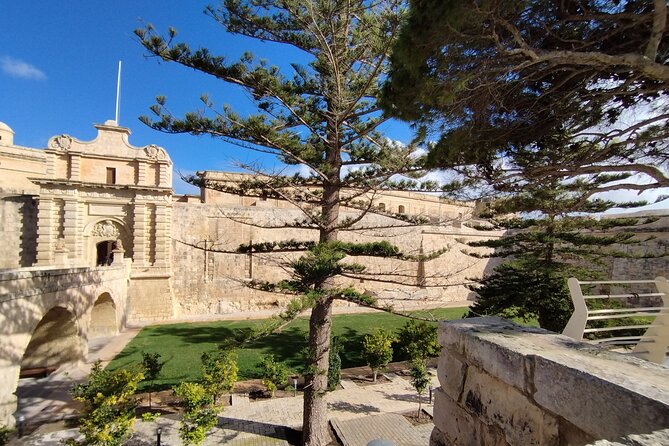
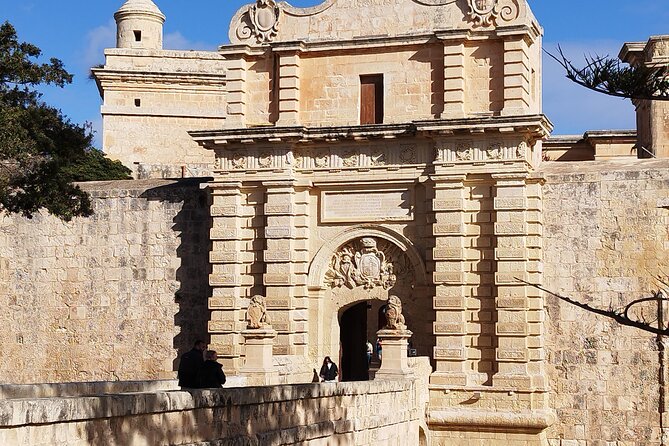
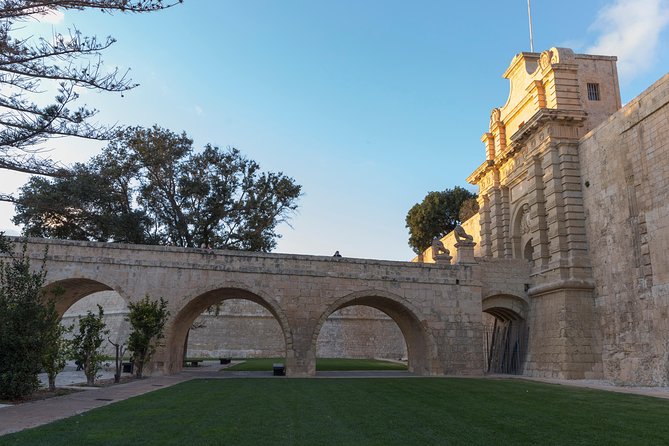
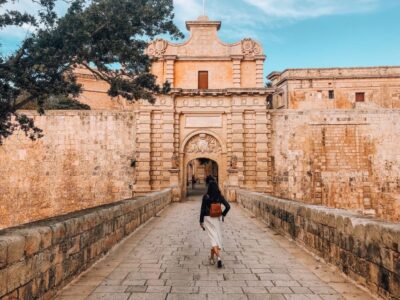
The meeting point is the Main Gate of Mdina, listed at VCM3+V9W, Mdina. Your guide holds a City Walking Tours red umbrella, which gives you a clear visual marker in a busy area.
That location is easy to understand once you reach Mdina, but the gate itself can be crowded. One practical tip is to arrive a little early and look beyond the first cluster of tour groups. Buses, children, and other groups may gather near the entrance, so stay alert for the red umbrella rather than relying only on the general meeting-point description.
The opening moments matter because the gate is not the quietest place for a talk. If you want to hear every word, position yourself close to the guide from the start and ask about the audio system before the group moves off.
The experience is offered in English and is led by a fully licensed guide. Confirmation arrives when you book, and the group may include up to 20 people. That is still a manageable size for a walking route, but it is not the same as a private tour.
Vilhena Palace and the entrance to Mdina
The first named stop is Vilhena Palace, a French Baroque palace near Mdina’s entrance. It was built in the early 18th century to designs by French architect Charles Francois de Mondion.
You spend about 10 minutes here. That is enough for an exterior explanation and a look at how the palace fits into Mdina’s entrance area, but not enough for a detailed visit inside. Since entrance fees are not included, you should not expect the tour to cover paid interiors.
This stop sets up an important theme of the walk: Mdina is not only a maze of old lanes. It also has formal palaces, religious buildings, and spaces shaped by Malta’s changing rulers and architectural tastes. The guide can give those details a human scale, helping you notice more than the pale limestone walls.
If you enjoy architecture, keep your eyes on the palace’s French Baroque character. If you prefer street life and small details, do not linger too long here. The more rewarding parts of Mdina come as the route narrows and the city’s quieter corners appear.
Pjazza Mesquita and the Game of Thrones connection
Pjazza Mesquita is a small, peaceful square inside Mdina. It was one of the main filming locations for Game of Thrones, which gives this otherwise quiet corner an extra layer of interest for fans of the series.
The stop lasts about five minutes, so this is a quick look rather than a film-focused presentation. The guide’s role here is to point out the setting and connect it with Mdina’s old-world appearance.
I like this kind of stop because it adds a modern reference without taking over the tour. The square still matters even if you have never watched the show. Its value is in the quiet atmosphere, the enclosed setting, and the sense that the city can shift from a real Maltese town into a film set with very little effort.
Bring your camera, but do not expect a long pause. The group needs to keep moving, and the route has several more important streets and squares ahead.
Other guided walks around Malta:
- The Original Valletta Walking Tour
★ 5.0 · 2,719 reviews - Valletta: 3-Hour Walking Tour
★ 4.7 · 1,605 reviews - Valletta: Guided City Walking Tour
★ 4.8 · 1,256 reviews - Valletta: Street Food and Culture Walking Tour
★ 4.8 · 1,251 reviews
Villegaignon Street and Mdina’s grand facades
Villegaignon Street is the main street through Mdina and one of the longer parts of the walk, at about 30 minutes. It is lined with some of the city’s most impressive palaces, making it a good place for the guide to explain Mdina’s architecture and layout.
This is where the walk’s middle section earns its keep. Instead of rushing past a long list of buildings, you have time to see how the street connects the city’s important sites. The guide can point out palaces, convents, churches, and typical streets as part of the larger story.
Mdina is often called the Silent City, and this street helps explain why. Even where the buildings are grand, the narrow lanes and old stone surfaces create a calm, enclosed feel. You are not simply checking off sights. You are seeing how the city’s design controls the pace of a walk.
The street can also be one of the busier parts of the route. Stay near the guide, especially if you want to catch the explanations about individual buildings. If you fall behind to take photographs, keep track of the group before the next turn.
Pjazza San Publju and the cathedral
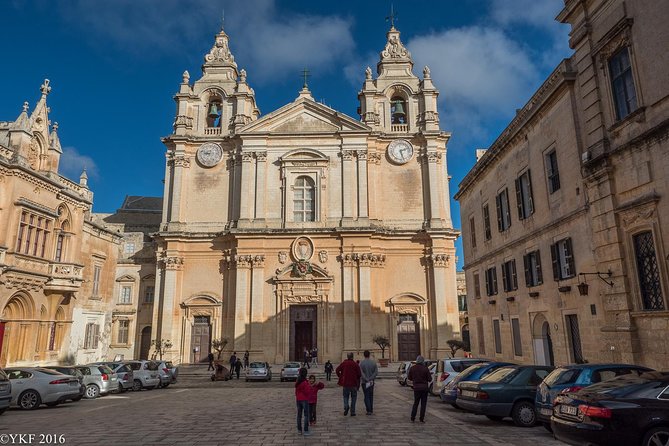
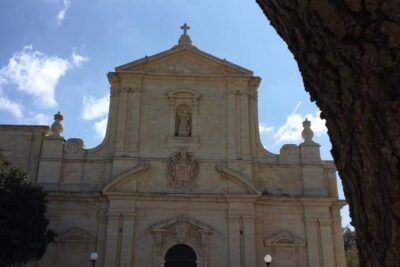
Pjazza San Publju is Mdina’s main square, dominated by the Metropolitan Cathedral dedicated to Saint Peter and Saint Paul. The tour allows about 10 minutes here.
This is an important stop because it gives you a sense of Mdina’s civic and religious center. The cathedral is the visual focus, and the square provides a useful pause after the narrower streets of Villegaignon Street.
As with Vilhena Palace, the walk does not include entry fees for churches or museums. You can see the cathedral from the outside during the tour, then decide if you want to return for an interior visit on your own.
That arrangement keeps the price low, but it also means you should plan separately if church interiors are high on your list. A guide can explain the setting and point you in the right direction, but the two-hour route is not designed to stop for extended visits inside every building.
Crossing into Rabat for a different Malta
Rabat lies just outside Mdina. Its name means suburb in a Semitic language, reflecting its earlier role as Mdina’s suburb.
The final part of the walk takes about 20 minutes and follows typical Rabat streets. Compared with Mdina’s palace-fronted lanes, Rabat feels quieter and more rural. This change is one of the strongest reasons to choose this tour rather than a Mdina-only walk.
You get to see how the two places relate to each other. Mdina presents Malta through its fortified historic center, while Rabat gives you a more everyday setting. The transition is short, but it helps you understand that these are not two unrelated stops.
The Rabat section is leisurely rather than packed with named monuments. That can be a benefit if you want to slow down and notice local streets, but it may feel less rewarding if you only want major landmarks. The tour finishes close to the Parish Church of Rabat, at the Basilica of St Paul, 64 Triq Ir-Rebha.
That ending is useful for planning the rest of your day. You are not returned to Mdina Gate, so keep the final location in mind if you have transport, a restaurant booking, or another activity arranged.
What the guide adds to the walk
The guide is the main reason to book rather than simply follow a map. The tour promises facts and insight beyond a standard guidebook, and the best feedback highlights clear explanations, strong local knowledge, and plenty of stories.
Nadine received particular praise for giving an excellent overview of Mdina and the surrounding area, then offering suggestions for what to do afterward. That is the kind of help I value on a first visit. You can ask which places deserve a return visit, where to spend more time, or how to shape the rest of your afternoon.
Another guide handled rain by finding shelter for the group for a short time. That shows the practical value of having a person who can adjust to conditions rather than simply following a printed route.
The guide’s style seems to favor useful information without burying you under dates and figures. Still, your experience depends on where you stand and how well the audio equipment works. One attendee found the guide informative but had trouble hearing because of static and surrounding noise.
Group size, headsets, and hearing clearly
The maximum group size is 20 people. That is small enough for a standard walking tour, but large enough to create problems in narrow streets or at a crowded gate.
Audio equipment deserves special attention. A headset may be available, but one attendee found there were not enough for a group of more than 15. Another suggested a personal loudspeaker or better receivers and earphones because of static and street noise.
If hearing clearly is important to you, ask for a headset as soon as you meet the guide. Stand close during the opening explanation and flag any problem immediately. This is especially important if you have hearing loss in one ear, since missing the first instructions can make it harder to follow the group later.
The tour is not private, so you should accept some background noise as part of the experience. The guide may be excellent, but good information is only useful if you can hear it.
Is $24.10 good value?
At $24.10 per person, this is a fair price for a two-hour guided walk in two historic towns. You are paying for a fully licensed English-speaking guide, a planned route, local stories, and the convenience of covering Mdina and Rabat in one outing.
The value is strongest if this is your first time in the area. A guide can explain the relationship between Mdina and Rabat, identify buildings you might otherwise pass, and help you choose where to return later.
The price is less compelling if you want entrance to museums or churches, since those fees are separate. It also may not suit you if you prefer to wander alone, stop for long photographs, or spend substantial time inside one attraction.
For most people, I would treat it as an orientation purchase. After two hours, you should know which streets and buildings deserve a slower second look. That can save time and prevent you from spending your whole visit trying to work out the layout.
Who should book this experience?
I would recommend it to first-time visitors, short-stay visitors, couples, families with older children, and anyone who wants a clear introduction before exploring alone. Children must be accompanied by an adult, and most people can take part in the walk.
It is also a good fit if you enjoy architecture, religious buildings, filming locations, and local stories in equal measure. The route offers a little of each without demanding a full day.
You may want another option if you need guaranteed audio clarity, want a private guide, or hope to enter several attractions during the walk. The group format and separate admission fees are the two points to weigh most carefully.
The route is near public transportation, and service animals are allowed. Those details make it easier to fit into a wider Malta itinerary, though the tour’s end near Rabat’s Parish Church is different from its start at Mdina Gate.
Should you book the Mdina and Rabat walk?
Book it if you want a compact, well-organized introduction to Mdina and Rabat, with a licensed guide to explain the palaces, streets, cathedral square, filming location, and the shift into quieter Rabat.
The tour offers good value at $24.10, especially for a first visit. Just arrive ready to stay close to the guide, ask for audio equipment early, and remember that church and museum entries cost extra.
I would skip it only if you already know Mdina well, prefer to explore without a group, or need a private and fully controlled audio experience. For everyone else, this is a practical way to put these two towns in context before setting off on your own.
FAQ
How long does the Mdina and Rabat Walking Tour last?
The walk lasts approximately two hours.
Where does the tour begin?
It begins at the Main Gate of Mdina, Malta. The guide holds a City Walking Tours red umbrella.
Where does the tour end?
It ends near the Parish Church of Rabat, close to the Basilica of St Paul at 64 Triq Ir-Rebha, Rabat.
What language is the tour offered in?
The tour is offered in English.
Are museum and church entrance fees included?
No. Entrance fees to museums and churches are not included.
What places are covered during the walk?
The route includes Mdina Gate, Vilhena Palace, Pjazza Mesquita, Villegaignon Street, Pjazza San Publju, and streets in Rabat.
Is the tour suitable for children?
Children must be accompanied by an adult.
What is the maximum group size?
The tour can have a maximum of 20 participants.
Can I cancel for a full refund?
Yes. You can cancel at least 24 hours before the experience start time for a full refund. Cancellations or changes made less than 24 hours before the start time are not accepted for a refund.
Just added in Malta
- World War II Malta Full-Day Walking Tour★ 4.3 · 18 reviews
- Gozo: Wine Tasting and Paired Dinner Experience★ 4.9 · 43 reviews
- Victoria, Gozo: Sunset Walking Food and Drink Tour★ 5.0 · 6 reviews
- Wakeboarding Adventure in Malta: Learn to Ride★ 5.0 · 4 reviews
- Malta: 5 hr Vintage Bus Tour – Mdina & Blue Grotto inc. food★ 5.0 · 22 reviews
- Valletta: Private Maltese Cuisine Walking Tour★ 4.8 · 8 reviews
- Valletta: Private Massage from a world renowned masseuse★ 4.6 · 9 reviews
- Valletta Street Food & History Tour With Private Transfers★ 4.5 · 15 reviews
Mdina & Rabat Tours, compared.
Highlights of Malta & Mdina Full Day Tour with Lunch
Read our review →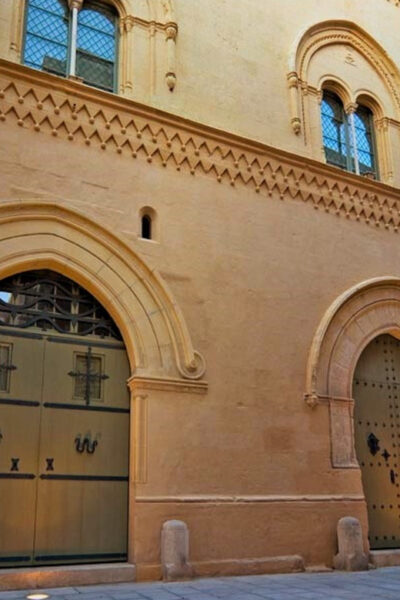

Mdina, Dingli Cliffs and San Anton Botanical Gardens
Read our review →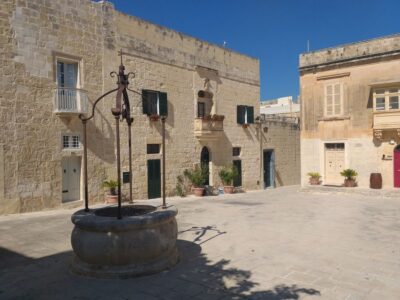


Mdina and Rabat Walking Tour inc. Catacombs and St. Paul’s Grotto
Read our review →Browse the lists this tour appears in