
Reviewed · MDINA & RABAT TOURS
Private Tour in Malta Prehistoric Temples & Mdina
Malta’s prehistoric temples are older than Egypt’s pyramids, and this private tour links three important sites before ending in the walled hill town of Mdina. I like the way it moves from ancient animal remains to massive stone buildings, then to Malta’s later medieval and noble past. You get a compact lesson in how the island changed over thousands of years.
I especially like the private format for two people, since you can ask questions without keeping pace with a large group. Pickup is offered, and admission to Għar Dalam, Tarxien, and Ħaġar Qim and Mnajdra is included. The main caution is time: four hours is enough for an overview, but not a slow visit to every site. One past participant also found the guide’s English accent unusual, so you may want to ask for clarification when needed.
Key things to know before booking
- Għar Dalam begins the story underground, with ancient animal bones displayed in a rare Victorian-style museum setting.
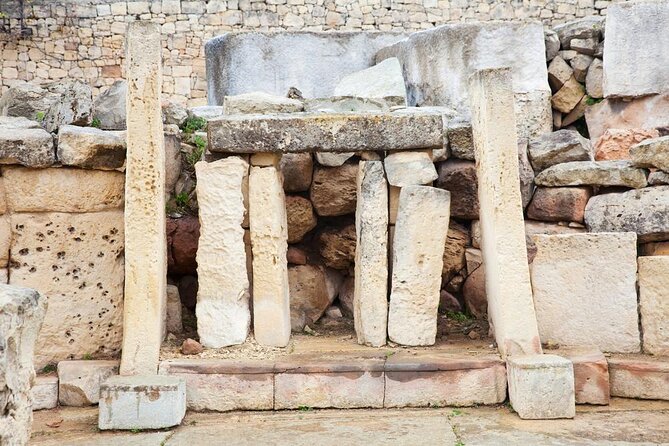
- Tarxien offers close-up views of Neolithic stonework, including the lower section of a huge pleated-skirt figure.
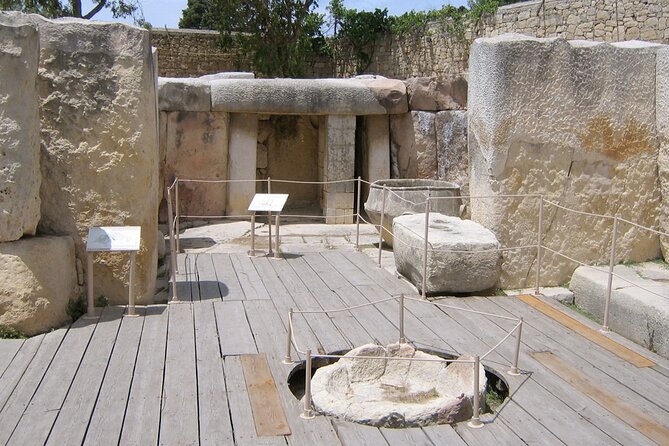
- Ħaġar Qim and Mnajdra provide the tour’s biggest sense of scale, with two temple sites linked by a downhill walk.
- Mdina changes the subject from prehistory to Malta’s fortified past, giving you streets, bastions, and old buildings after the archaeological sites.
- The tour is private for your group of up to two, with pickup available and entrance tickets included at the prehistoric sites.
- Plan for a focused half-day, not a full-day exploration of Malta.
Why this four-hour route works
This tour is built around a strong historical sequence. You begin at Għar Dalam, where the evidence is buried in a cave and museum. At Tarxien, human construction becomes the focus. At Ħaġar Qim and Mnajdra, you see temple architecture on a larger scale. Mdina then brings you forward into Malta’s fortified urban past.
I like this structure because the sites do not feel like four unrelated stops. The first three belong to Malta’s prehistoric story, while Mdina gives you a later chapter in stone. If you want a broad introduction rather than a single long museum visit, the route makes good use of a short morning.
The private setup matters here. Archaeological sites raise plenty of small questions: What was a stone used for? How do archaeologists know a temple was rebuilt? Why were the structures placed where they are? With only your group of up to two, you can ask those questions directly. Ray, one of the guides associated with this experience, is described as proud of his Maltese heritage and able to add context beyond the objects and ruins in front of you.
The tradeoff is pace. The schedule allows about 45 minutes at Għar Dalam, 45 minutes at Tarxien, 90 minutes at the Ħaġar Qim and Mnajdra park, and one hour in Mdina. Driving time fits around those visits, so you will need to keep moving. This is best for someone who wants a well-shaped introduction, not someone determined to study every carved block in detail.
Other trips into the old capital from Valletta:
- Mdina: Valletta Waterfront Area, Mdina, and Rabat Night Tour
★ 4.3 · 302 reviews - Malta: Rabat, Mdina, & San Anton Gardens Tour
★ 3.9 · 243 reviews - Mdina and Rabat – City Walking Tour
★ 5.0 · 215 reviews
Għar Dalam: Malta’s oldest prehistoric stop
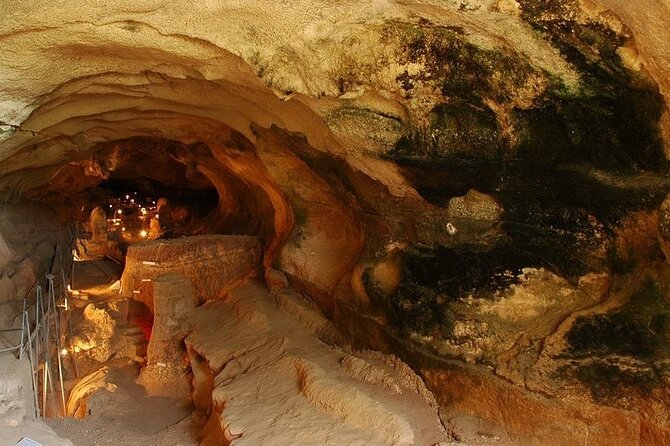
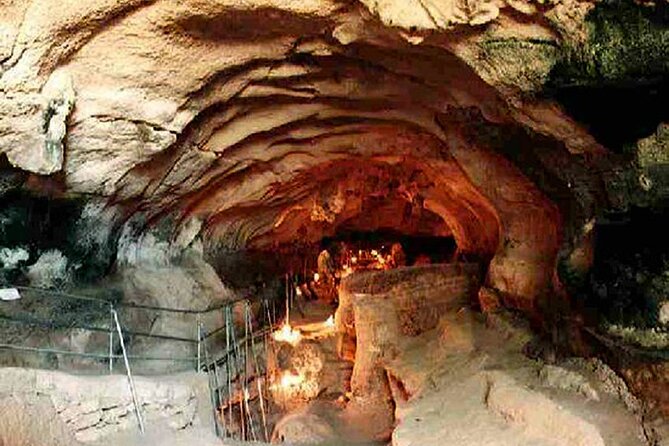
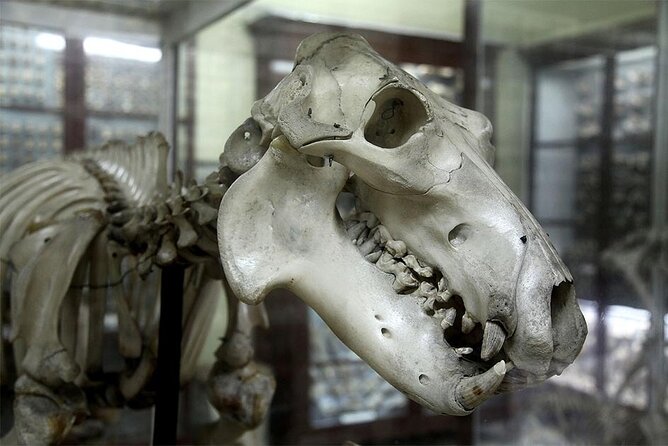
Għar Dalam opens the tour with one of Malta’s oldest prehistoric sites. The cave itself matters, but the display in Joseph Baldacchino’s Hall gives you the clearest first look at what makes the place important. Rows of ancient animal bones found in the cave are arranged in a Victorian-style display, one of only a small number of such displays still found in Europe.
That old-fashioned presentation is part of the appeal. This is not simply a modern room with labels and glass cases. The hall retains the look of an earlier age of museum collecting, when specimens were arranged to show visitors the story of natural history in a direct, visual way. You can see the evidence before moving on to the human-built sites.
The 45-minute stop is well judged for a first introduction. You have enough time to understand why the cave matters without using up the morning before the temples. If animal remains and museum displays are your main interest, you may wish the schedule allowed longer. For most people, though, the stop works as a starting point rather than the main event.
Your guide can also help connect the bones to the wider story of Malta. The value of a private guide is not just getting from one place to another. It is having someone explain why a cave filled with animal remains belongs in the same morning as some of Europe’s oldest monumental buildings.
Tarxien: carved stone and early architecture
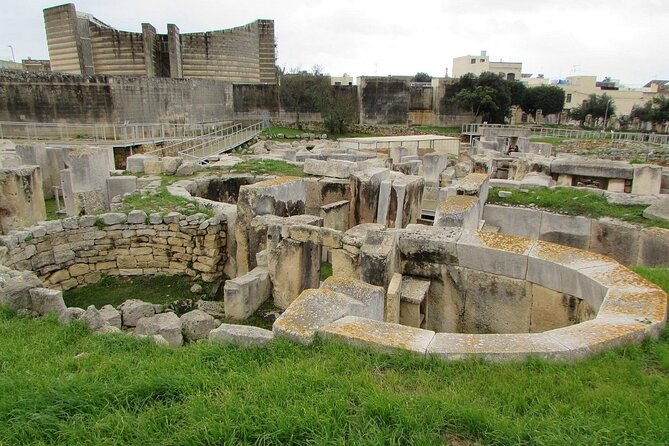
The Hal Tarxien Prehistoric Complex shifts your attention from natural remains to human design. The site contains four megalithic structures, first built during the late Neolithic period and later adapted for use in the Early Bronze Age.
That later reuse is an important detail. Tarxien is not a single moment frozen in place. People returned to the site and changed how it was used. Even without knowing every archaeological term, you can see that these stones had a long life and that the place mattered across more than one period.
The most memorable feature is the lower section of a colossal figure wearing a pleated skirt. It was found in 1913 by farmer Lorenzo Despott, and it gives the site a human scale. The figure is incomplete, but that is part of what makes it useful. You are looking at a surviving fragment that hints at the size and care involved in the original sculpture.
The South Temple is especially noted for its decoration. In a 45-minute visit, your guide can point out the carved details and explain how the four structures relate to one another. I would pay close attention here rather than rushing for a grand view. Tarxien rewards careful looking at surfaces, fragments, and the way the buildings were arranged.
This stop may feel less immediately dramatic than Ħaġar Qim because it is a more enclosed archaeological complex. Its strength is detail. If you enjoy the beginnings of architecture and the evidence of how people shaped stone, Tarxien may become one of the most satisfying parts of the morning.
Ħaġar Qim and Mnajdra: the biggest prehistoric experience
The longest stop is the Ħaġar Qim and Mnajdra Archaeological Park, with about an hour and a half allowed for both sites. Ħaġar Qim is more than 5,000 years old and sits on top of a promontory. To the east is a fertile plain, while rough garrigue slopes toward the sea to the west.
That setting gives the temples a sense of place that the earlier sites cannot match. You are not simply looking at stones in an enclosed complex. The buildings occupy a prominent point above the coast, with open views around them. The position helps you understand why the site feels monumental even when you are studying individual blocks and chambers.
Mnajdra is about 500 meters downhill from Ħaġar Qim. It was built around the same period and was probably used by the same community, partly because of its close location. The route between the two sites is an important part of the visit. You see that these were not isolated ruins but connected places within one prehistoric setting.
This is where the tour’s title idea, architecture before Egypt, becomes most useful. You are looking at very early monumental construction, created long before the better-known stone monuments of ancient Egypt. The sites do not need exaggerated claims to be impressive. Their age, size, decoration, and placement do enough work.
The 90-minute allowance is the most generous block in the day, and rightly so. You will want time at both temples, time to walk between them, and time to take in the coastal setting. Still, it is not an unlimited visit. If you stop often for photographs or want to read every sign, you may feel pressed near the end.
The outdoor nature of this stop also makes weather important. The experience requires good weather, and poor conditions can lead to a new date or a full refund. That policy is practical because much of the appeal comes from moving between the two sites and taking in their exposed setting.
Other temple sites within reach of Valletta:
- Gozo Full Day visiting Ggantija Temples, Salt Pans & Dwejra
★ 3.9 · 112 reviews - Hagar Qim temple (UNESCO) and Limestone Heritage guided tour
★ 3.5 · 11 reviews - Hagar Qim temple (UNESCO), Limestone Heritage & Marsaxlokk Market guided tour
★ 4.0 · 10 reviews - Malta tour 3Cities , Marsaxlok ,Blue grotto Hagar qim
★ 4.9 · 4 reviews
Mdina: from prehistoric stones to fortified streets

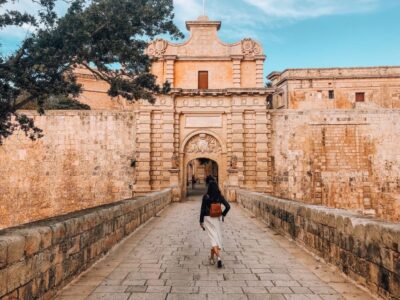
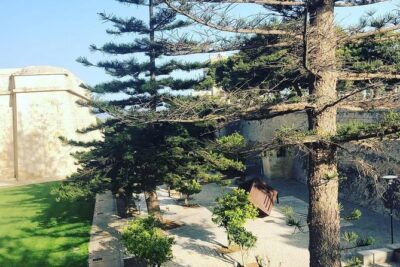
Mdina gives the morning a useful change of pace. After several archaeological sites, you move into a small fortified town on a hill overlooking large parts of Malta. Tall bastion walls and centuries-old buildings define the setting, while narrow streets create a very different kind of historical experience.
You have about one hour here, and there is no separate admission charge listed for the visit. That makes Mdina a good final stop because you can explore without adding another ticket to the cost. The hour is enough for a walk and a first look at the town, though not enough for every building, museum, and viewpoint.
I like ending here because Mdina lets you experience Malta as a lived-in historic place rather than only as an archaeological site. The prehistoric temples tell you about communities from thousands of years ago. Mdina shows a later Malta shaped by fortification, urban life, and long-preserved buildings.
The town sits on a hill, so the setting is part of the experience. You can look across broad portions of the island from the fortified position. The tour does not promise a detailed guided history of every street, so use the hour to get your bearings, walk the old lanes, and ask your guide to point out the most important features.
Mdina can also be the point where the schedule feels tight. An hour passes quickly, especially if you want photographs or prefer a slow walk. Think of this as an introduction to the town, not a full Mdina day.
What the private format adds
The price is $331.37 per group of up to two, not per person. For a pair, that works out to about $165.69 each before considering the convenience of pickup and the included admissions. That is a meaningful cost, but it is easier to justify if you value a private vehicle, direct questions, and a route that would be awkward to organize in a short morning.
The private format is most useful for couples, friends, or family members with a clear interest in Malta’s early past. You do not need to wait for a large group, and the driver can communicate directly about the pickup location. Accurate pickup details matter, since the driver contacts you while on the way to confirm where you are waiting.
This is also a good choice if you want transport between sites without piecing together public transportation. The experience is near public transportation, but the tour is designed around pickup and a private group. That saves planning time, especially when four separate stops need to fit into roughly four hours.
The value is less clear if you prefer to spend a full day at one archaeological site or if you are traveling alone. A solo visitor pays the full group price, so the cost per person becomes much higher. For two people who want a compact private introduction, the pricing is more reasonable.
Guide communication and the half-day limit
Ray is specifically identified as a guide who brings strong knowledge of Malta and pride in Maltese heritage to the experience. That local perspective can add meaning to the sites, especially when the physical remains are incomplete and you need help imagining how they once functioned.
One practical point deserves attention: a past participant found the guide’s English accent unusual for non-Maltese listeners. That does not mean communication will be a problem, but you should feel comfortable asking for a point to be repeated. On a history-focused tour, clear explanation matters as much as the ruins themselves.
Also, read the timing carefully before you book. This is an approximately four-hour experience beginning at 9:00 am. It is a half-day tour, not a full-day trip around Malta. You will visit four strong stops, but you will not have hours for lingering at each one.
That limitation is not necessarily a flaw. A shorter route can work well at the start of a Malta visit, when you want to learn the basic sequence of the island’s past before deciding where to spend more time. It is less suitable if ancient sites are your main reason for coming and you prefer a slow, specialist visit.
Who will get the most from this tour

I would choose this experience if you want:
- A private morning for two people
- A clear introduction to Malta’s prehistoric temples
- Admission included at the three archaeological sites
- Pickup rather than separate transport planning
- A guide who can connect the ruins to Malta’s wider story
- A final hour in Mdina to balance archaeology with historic streets
I would think twice if you need a full day, dislike a firm schedule, or want long independent visits at each site. The route covers a lot, but it does so by giving each place a defined time slot.
It also suits people who enjoy seeing how history builds in layers. Għar Dalam offers animal remains and an old museum display. Tarxien brings carved stone and reused structures. Ħaġar Qim and Mnajdra show large-scale temple building in an open coastal setting. Mdina then gives you fortified streets and preserved buildings from a much later period.
Booking details worth keeping in mind
The tour starts at 9:00 am, and pickup is offered. Give an exact pickup location and keep your phone available so the driver can confirm the meeting point. The tour is offered in English, and most people can participate.
Confirmation is received when you book. The activity can be canceled for poor weather or if the minimum number of participants is not met. In either case, you are offered a different date or experience, or a full refund.
You can cancel for a full refund up to 24 hours before the start time. Cancellations or changes made less than 24 hours before the start are not refunded or accepted, and the cutoff uses Malta’s local time.
Should you book this Malta history tour?
Book it if you want a well-organized private half-day that connects Malta’s oldest cave site, Neolithic temples, and Mdina in one route. The strongest reasons are the private attention, included archaeological admissions, pickup, and the chance to hear local context from a guide such as Ray.
Skip it if you want a full-day archaeological study or prefer to spend several hours at each temple. The unusual English accent noted by one participant is also worth keeping in mind, though a quick request to repeat or rephrase should help.
For two people who want an efficient introduction to Malta’s past, this is a practical choice. You will leave with a clearer sense of how the island’s story moves from prehistoric animal remains and monumental stonework to fortified towns and later urban life.
FAQ
How long does the private Malta tour last?
The experience lasts approximately four hours and begins at 9:00 am. It is designed as a half-day tour.
What sites are included?
The tour visits Għar Dalam, the Hal Tarxien Prehistoric Complex, the Ħaġar Qim and Mnajdra Archaeological Park, and Mdina.
Are entrance tickets included?
Admission tickets are included for Għar Dalam, Hal Tarxien, and Ħaġar Qim and Mnajdra. The Mdina visit has no separate admission charge listed.
Is this a private tour?
Yes. Only your group participates, and the price covers up to two people.
Is pickup available?
Yes. Pickup is offered. You need to provide accurate pickup information, and the driver will contact you while on the way to confirm the location.
What happens if I need to cancel?
You can receive a full refund if you cancel at least 24 hours before the start time. Changes or cancellations made less than 24 hours before the start are not accepted or refunded.
Just added in Valletta
- World War II Malta Full-Day Walking Tour★ 4.3 · 18 reviews
- Malta: 5 hr Vintage Bus Tour – Mdina & Blue Grotto inc. food★ 5.0 · 22 reviews
- Valletta: Private Maltese Cuisine Walking Tour★ 4.8 · 8 reviews
- Valletta : Highlights & Hidden Gems Walking Tour★ 3.1 · 5 reviews
- Valletta & Mdina: Private Tour★ 4.5 · 16 reviews
- Valletta: Food and Culture Private Tour★ 4.9 · 10 reviews
- Valletta: Guided Walking Tour★ 3.8 · 5 reviews
- Afternoon Harbours Cruise with Guide and Roundtrip Transfers★ 3.4 · 11 reviews
Mdina & Rabat Tours, compared.
Highlights of Malta & Mdina Full Day Tour with Lunch
Read our review →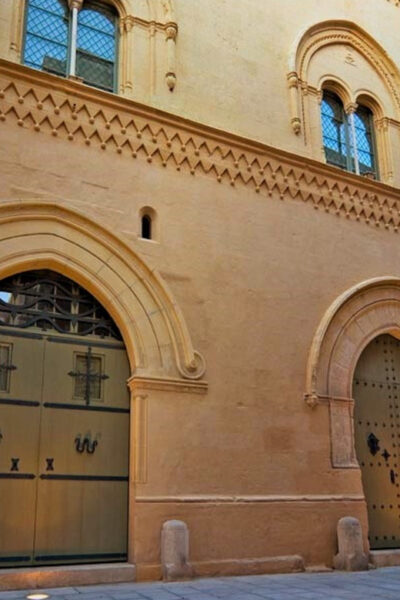

Mdina, Dingli Cliffs and San Anton Botanical Gardens
Read our review →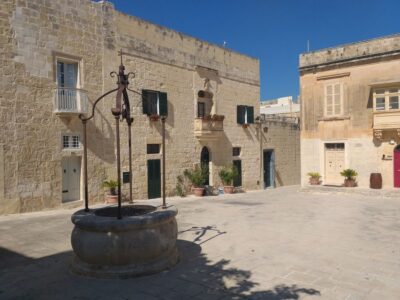



Mdina and Rabat Walking Tour inc. Catacombs and St. Paul’s Grotto
Read our review →Browse the lists this tour appears in