
Reviewed · GARDENS & PALACES
The Limestone Heritage Park and Gardens (Entry Ticket)
Malta’s story is carved into its limestone, and this family-run park in Siggiewi gives you a clear, hands-on way to understand it. You move from an audio-visual presentation to a self-guided walk, then on to geology displays, a museum hall, a 400 B.C. Punic tomb, gardens, animals, and live stonework.
I like the 17-language audio guide, which lets you take the visit at your own pace, and the chance to see stone actually being shaped rather than only reading about it. The main drawback is scale: at about $11, it is good value for a relaxed half-day stop, but the site is smaller than some first-time visitors may expect.
Key points to know
- A 7,000-year story: The park connects Malta’s geology, ancient tombs, traditional stonework, and everyday culture.
- A self-guided visit: You can enter at any time during opening hours on your booked day and follow the audio route at your own speed.
- A rare Punic-era stop: The included tomb dates to about 400 B.C.
- More than a museum: Citrus gardens, farm animals, and live carving give the visit an outdoor, family-friendly feel.
- Extra treats cost more: Maltese snacks, drinks, and stone souvenirs are available, but they are not part of the $11 ticket.
- Plan around short hours: The park closes at 4:00 P.M. on weekdays, at noon on Saturday, and all day Sunday and on public holidays.
Why Maltese limestone matters

Limestone is not just a building material in Malta. It is part of the island’s identity, and the park gives you a useful way to see how geology shaped local life over thousands of years.
The attraction begins with Malta’s long story rather than with one isolated monument. You get an audio-visual presentation that sets the scene, followed by an audio-guided route through the site. This order matters. It gives you a basic framework before you start looking at stone samples, old working methods, and archaeological remains.
I find this approach especially useful if you are new to Malta. Grand churches, defensive walls, village homes, and older ruins can seem like separate subjects at first. Here, they are tied together through the local stone beneath your feet.
The presentation and audio route are available in Maltese, English, French, German, Italian, Dutch, Russian, Spanish, Greek, Portuguese, Swedish, Danish, Finnish, Norwegian, Polish, Chinese, and Japanese. That makes the park easier to use for families and mixed-language groups. The host or greeter speaks English, while the recorded material does the heavy lifting in your chosen language.
Other gardens and palaces around Malta:
- Malta: Mdina, Dingli Cliffs and San Anton Botanical Gardens
★ 4.3 · 991 reviews - Mdina, Rabat, Dingli cliffs, San Anton gardens, Ta’ Qali & Mosta guided tour
★ 4.0 · 248 reviews - Malta: Rabat, Mdina, & San Anton Gardens Tour
★ 3.9 · 243 reviews
Starting with the audio-visual presentation
Your visit begins with an audio-visual introduction to Malta’s past and stone traditions. This is not a live guided tour, so you will not be attached to a fixed group or dependent on a guide’s timetable.
I like that flexibility. You can arrive during the opening window, begin when ready, and then spend more time in the areas that interest you most. The format also works well for families, since you can move on when younger children lose patience instead of waiting for a long formal talk to end.
The presentation is best treated as an orientation. It helps you understand why limestone has mattered to Malta for so long, then prepares you for the displays and outdoor sections. If you already know Malta’s ancient and architectural story, you may find the introduction familiar, but it still gives the rest of the visit a sensible order.
Following the 17-language audio walk
After the opening presentation, the audio-guided walkthrough leads you through the park. You control the pace, which is one of the strongest features of this ticket.
You can pause to look closely at an exhibit, move more quickly through a section, or give children time with the animals and gardens before returning to the historical material. The route is not presented as a tightly timed excursion, and your ticket is valid for one entry on the booked day.
This is also where the attraction feels different from a conventional museum. The audio gives you context, but the setting keeps changing. You move between indoor displays and outdoor spaces, so the visit does not rely on rows of cases and labels alone.
A practical point: there is no re-entry. Once you leave, you cannot use the same ticket to come back later that day. I would plan to finish the full visit before heading out, especially if you want time for the farm, stone demonstration, refreshments, and shop.
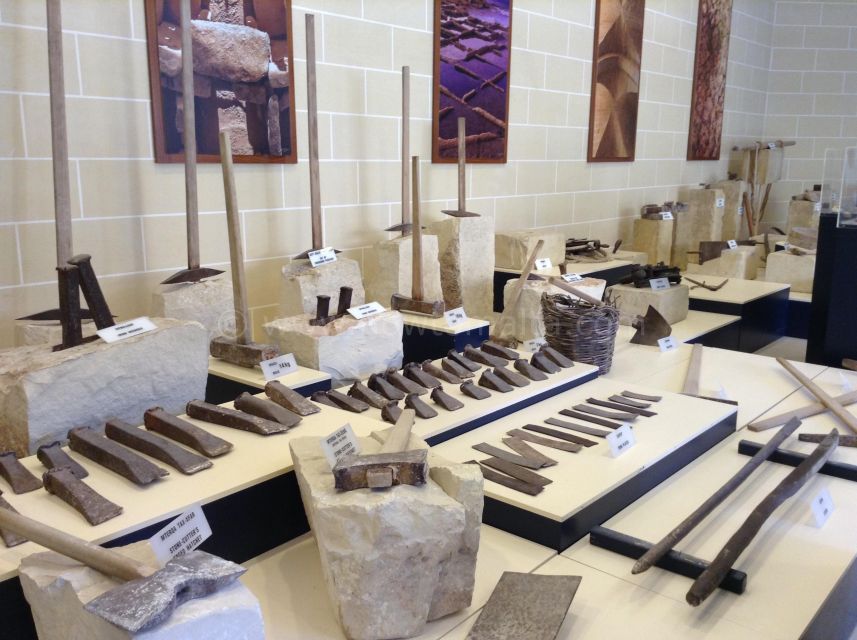
Reading the geology section and museum hall

The geology section gives you the basic physical story behind Malta’s stone. This is a useful stop because it turns a familiar material into something you can examine rather than simply walk past.
The museum hall then shifts the focus toward human use and local culture. Together, these two sections explain why stonework became such an important part of island life. You are not only looking at old objects. You are seeing the connection between the ground itself and the buildings, crafts, and traditions that developed above it.
I would give these displays your attention early in the visit, before the outdoor areas become the main attraction. They provide the background that makes the live carving and historic tomb easier to appreciate.
The park is described as award-winning, but its appeal is not based on flashy scale. It works through a clear mix of displays, interpretation, demonstrations, and open-air features. If you prefer a major museum with a large collection, this will feel modest. If you want a manageable introduction to Maltese stone culture, the size is part of the charm.
Other ways into the past around Malta:
- Malta: Prehistoric Temples, Limestone Heritage & Blue Grotto
★ 4.2 · 412 reviews - Maltese Islands History Audio-Visual Show and La Sacra Infermeria Tour
★ 4.0 · 344 reviews - Valletta: Self-Guided Historical Walking Tour (Audio Guide)
★ 3.7 · 251 reviews - Wonderful Valletta, gastronomy, art, and history in the Mediterranean
★ 4.5 · 72 reviews
Seeing the 400 B.C. Punic tomb
One of the most unusual included features is the Punic tomb, dating to about 400 B.C. It gives the visit a direct link to Malta’s ancient past and breaks up the more recent focus on quarrying and stonecraft.
The tomb is valuable because it is not merely a display about ancient Malta. You are seeing an actual archaeological feature included within the park visit. Its presence also reminds you that stone has served many purposes here, from burial places to buildings and decorative work.
Do not expect a huge archaeological complex. This is one stop within a broader attraction, not a full ancient site with a large network of ruins. Still, it adds real historical weight to a visit that could otherwise feel mainly like a craft and family outing.
Watching live stonework in action

The live stonework demonstration is the park’s most immediate connection to traditional craft. Instead of only hearing how limestone was used, you get to watch the process in action.
That makes the visit more memorable for me. A finished stone object can look simple, but seeing the work behind it gives you a better sense of skill and patience. The demonstration also suits children, since it offers something concrete to watch after the more explanatory museum sections.
The exact demonstration schedule is not provided, so I would ask about timing when you arrive. If this is the feature you most want to see, do not leave it until the last few minutes before closing.
There is also an extra option mentioned at the park: you can create your own limestone piece for €5. This is separate from the entry price. It may appeal to anyone who wants a small hands-on souvenir rather than a shop-bought object, and you can take time to work on it until it feels right.
That extra activity is not essential to the visit, but it helps explain why the park works for families. Children and adults can watch a craft, then try a small version of it themselves. The added fee is modest, though it is worth remembering that the advertised admission price does not cover every activity or purchase on site.
Taking a break in the citrus gardens
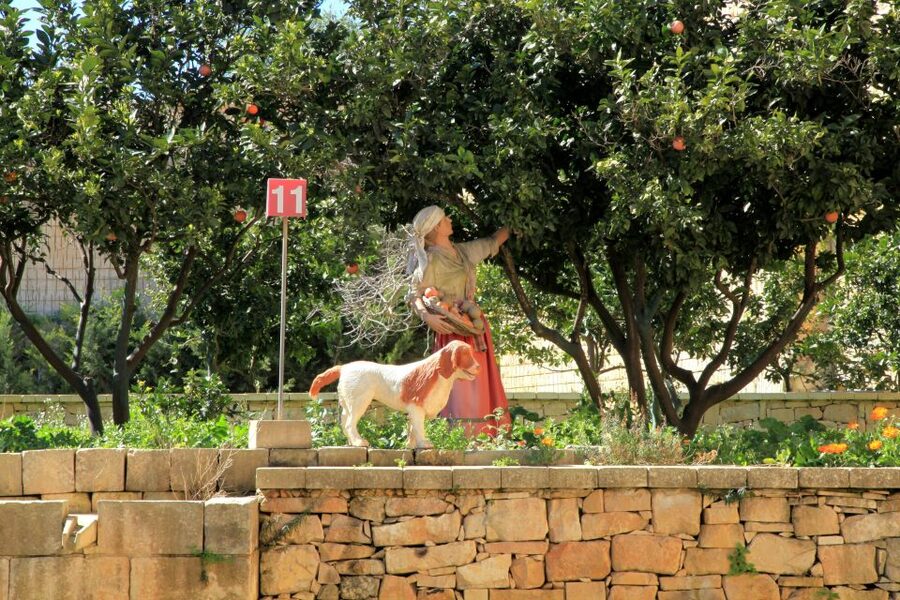
The citrus gardens offer a change of pace after the indoor displays and historical material. You can wander, sit for a while, and enjoy a quieter side of the attraction.
I like the fact that the park does not force you to choose between culture and a pleasant outdoor break. Some people will focus on the geology and tomb, while others will remember the gardens and animals most clearly. Both are part of the same ticket.
The gardens also make the site more practical for a mixed group. One person can spend time with the audio guide while another takes a slower break outside. Since you have the day’s opening period rather than a fixed short appointment, you can set your own rhythm.
Keep the opening hours in mind, though. The venue is open from 9:00 A.M. to 4:00 P.M. Monday through Friday, and from 9:00 A.M. to noon on Saturday. The last entry is 30 minutes before closing, so Saturday visitors need to arrive early.
Meeting the farm animals
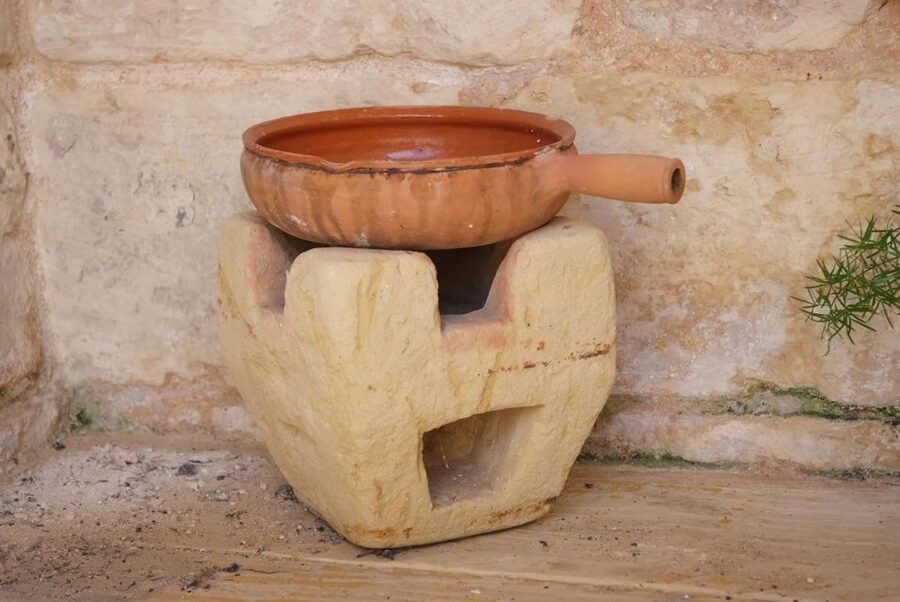
The farm animal park gives the experience a friendly, informal side. It is included with admission and can be a welcome stop for families who need a break from history.
I would not book this as a farm visit alone. The animals are one piece of a larger attraction, alongside the museum, geology displays, tomb, gardens, and stonework. Their value is in making the park feel more varied and relaxed.
For families, this variety is useful. A child may not want to listen to every audio section, but an animal stop can keep the day moving. Adults get a chance to spend more time with the exhibits while the group has a simple outdoor activity to look forward to.
Food, drinks, and the Maltese platter
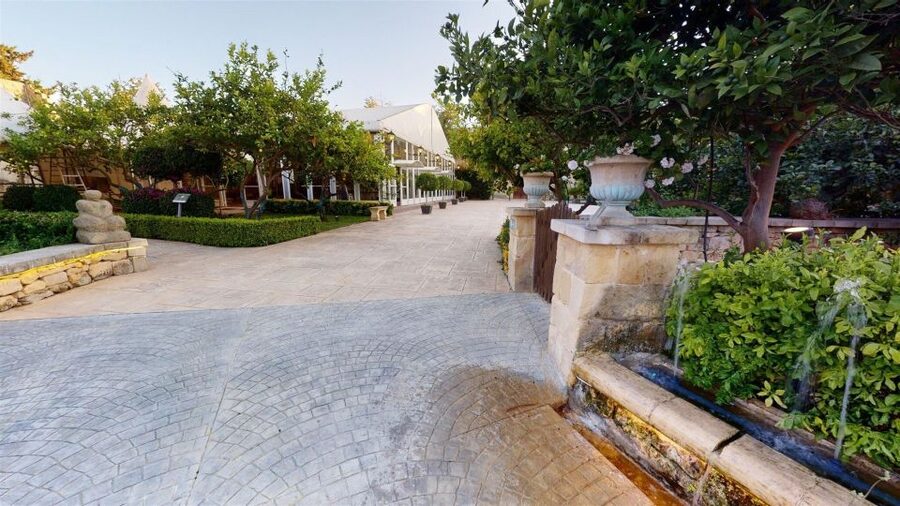
The park has a place to stop for tea or coffee and offers Maltese food, including a Maltese platter and Maltese tuna ftira. These items are not included in the ticket, so you should budget separately if you plan to eat there.
This is a good chance to try something local without turning lunch into a separate excursion. The food is described as freshly served, and the setting is the countryside rather than a busy city street. You can also choose from other snacks.
I would not make the meal the main reason to visit, since the food selection and prices are not specified. Instead, see it as a convenient extra after the walkthrough. If you are watching your budget, bring that in mind when comparing the $11 admission with your likely spending on drinks, food, and souvenirs.
The shop and Maltese stone souvenirs
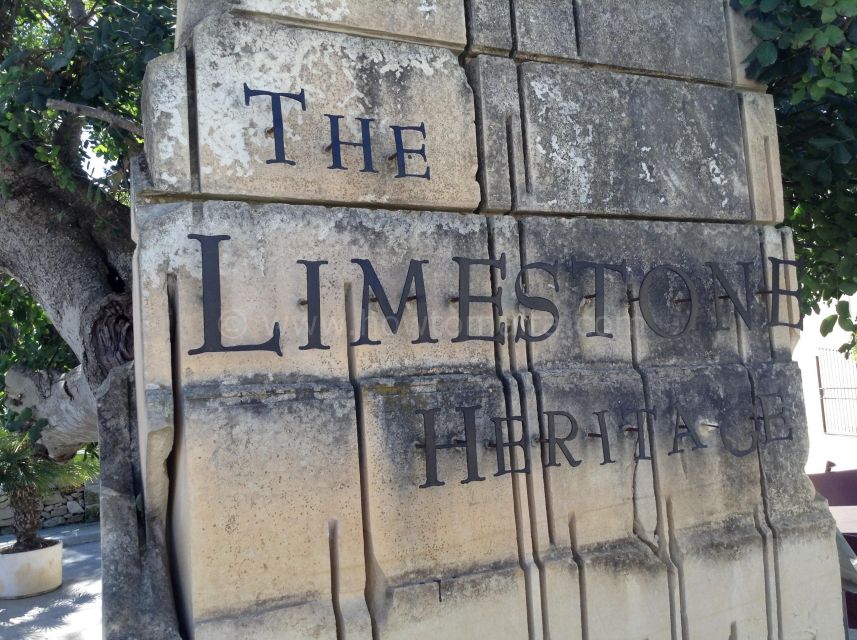
The on-site shop sells genuine Maltese goods and exclusive stone souvenirs. You are not required to buy anything, but the shop gives you an easy place to look for a physical reminder of the visit.
Stone souvenirs make particular sense here because they connect directly to what you have just seen. You can compare a finished object with the tools and demonstrations at the park, rather than buying a generic item with no link to the experience.
Prices and product details are not provided, so I would browse first and decide afterward. The shop is an optional finish, not part of the admission value.
Is $11 good value?
At $11 per person, the ticket is fairly priced if you plan to use the whole visit. You receive the presentation, audio walkthrough, museum hall, geology section, Punic tomb, citrus gardens, animal park, and live stonework demonstration.
The value improves if you like self-guided attractions and can spare several hours. You are not paying for hotel transport or a private guide, but you are getting a broad, flexible visit rather than a single short display.
The main caution is expectation. One visitor described the park as smaller than expected but very nice, and that is useful advice. The attraction offers variety more than size. It is not a vast archaeological park where you spend an entire day walking among major ruins.
If you treat the ticket as a compact cultural stop with outdoor extras, the price makes sense. If you expect a large museum or a full-day guided tour, you may feel the site is limited. The option to stay as long as you like during opening hours helps, but the visit is still shaped by the park’s modest scale.
Who should book this experience?
I would recommend it most strongly to:
- Families who want history mixed with animals and outdoor space
- Visitors who prefer self-guided sightseeing
- Anyone curious about Malta’s limestone buildings and craft traditions
- People looking for a quieter stop outside the busiest tourist areas
- Visitors who appreciate audio tours in a language other than English
- Anyone with time for a relaxed cultural visit in Siggiewi
It may be less suitable if you want a live guide, a large archaeological site, or a tightly packed full-day program. No hotel pickup or drop-off is included, so you must arrange your own way to the park.
The attraction is wheelchair accessible. Since opening times can change, I would confirm them before setting out, particularly around Malta’s public holidays. The park is closed on Sundays and public holidays, including dates such as January 1, February 10, March 19, March 31, May 1, June 7, June 29, August 15, September 8, September 21, December 8, December 13, and December 25, as well as Good Friday.
My recommendation for the Limestone Heritage Park
I would book this if you want an easy-to-follow introduction to Malta’s stone culture, with enough variety to keep a family group interested. The combination of the ancient tomb, geology displays, live carving, citrus gardens, and animals gives the visit more range than a standard museum.
Go in expecting a modest, carefully arranged attraction rather than a huge park. Arrive with time to use the audio guide, ask about the stone demonstration, and leave room for the gardens, farm, and optional food. At $11, it is a sensible choice when you value context, flexibility, and a few distinctly Maltese details in one stop.
FAQ
How much does entry to Limestone Heritage Park and Gardens cost?
The listed price is $11 per person. Food, drinks, optional purchases, and the €5 limestone activity mentioned in the visitor information are not included.
How long is the ticket valid?
The ticket is valid for one day, on the date booked. You may enter at any time during the park’s opening hours that day.
Can I leave and come back later?
No. The ticket allows one-time entry only, and re-entry is not allowed.
What are the opening hours?
The park is open Monday through Friday from 9:00 A.M. to 4:00 P.M. On Saturday, it is open from 9:00 A.M. to noon. The last entry is 30 minutes before closing.
Is the park open on Sundays and public holidays?
No. The venue is closed on Sundays and public holidays in Malta.
What languages are available for the audio guide?
The audio guide and audio-visual presentation are available in Maltese, English, French, German, Italian, Dutch, Russian, Spanish, Greek, Portuguese, Swedish, Danish, Finnish, Norwegian, Polish, Chinese, and Japanese.
Is there a live guide included?
No live guide is included. An English-speaking host or greeter is available, and the main interpretation is provided through the audio-visual presentation and audio-guided walkthrough.
Are food and drinks included?
No. Tea, coffee, a Maltese platter, Maltese tuna ftira, and other snacks are available to buy separately.
Can I cancel the booking?
Yes. You can cancel up to 24 hours in advance for a full refund. The activity also offers a reserve-now, pay-later option.
Just added in Malta
- World War II Malta Full-Day Walking Tour★ 4.3 · 18 reviews
- Gozo: Wine Tasting and Paired Dinner Experience★ 4.9 · 43 reviews
- Malta: 5 hr Vintage Bus Tour – Mdina & Blue Grotto inc. food★ 5.0 · 22 reviews
- Victoria, Gozo: Sunset Walking Food and Drink Tour★ 5.0 · 6 reviews
- Wakeboarding Adventure in Malta: Learn to Ride★ 5.0 · 4 reviews
- Valletta: Private Maltese Cuisine Walking Tour★ 4.8 · 8 reviews
- Valletta: Private Massage from a world renowned masseuse★ 4.6 · 9 reviews
- Valletta Street Food & History Tour With Private Transfers★ 4.5 · 15 reviews
Gardens & Palaces, compared.

Mdina, Dingli Cliffs and San Anton Botanical Gardens
Read our review →
Mdina, Rabat, Dingli cliffs, San Anton gardens, Ta’ Qali & Mosta guided tour
Read our review →
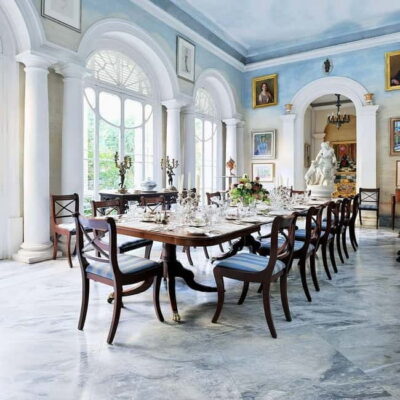
Casa Rocca Piccola Palace and Museum Entrance Ticket
Read our review →
Three cities walking tour incl. entrance to Inquisitor’s palace
Read our review →
3 Cities Walking Tour With Inquisitors Palace Entry
Read our review →
Rabat Mdina and San Anton Gardens Group Tour with St. Paul’s Catacombs
Read our review →Browse the lists this tour appears in