
Reviewed · WALKING TOURS
Valletta World War II Private Walking Tour
Malta’s World War II story is written into Valletta’s streets: a gutted opera house, shelter tunnels, memorials above the Grand Harbour, and the forts that helped hold the island together. This private walk follows the city’s ordeal from 1940 to 1943, then finishes inside the National War Museum at Fort St Elmo.
I like the personal guide and the way this tour links big events to ordinary life, including Victory Kitchens that fed people during the siege. I also like that the guide walks through the museum with you instead of simply pointing you toward the entrance. The main drawback is physical: this is a serious walk over hard stone, with hills and stairs, and the museum ticket costs extra.
Key points to know before booking
- The Siege Bell and Grand Harbour: Hear how Valletta endured sustained bombing and blockade pressure while looking across the harbor.
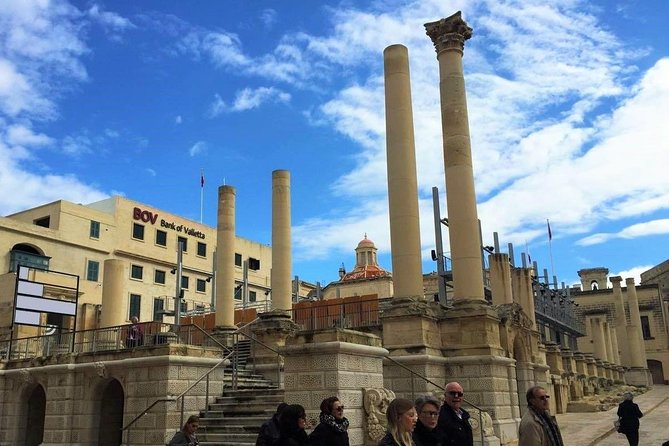
- The ruined Royal Opera House: See the shell left by a 1942 German raid, one of the city’s clearest wartime scars.
- The Illustrious Blitz: Learn why Axis aircraft repeatedly targeted the HMS Illustrious in Valletta in 1941.
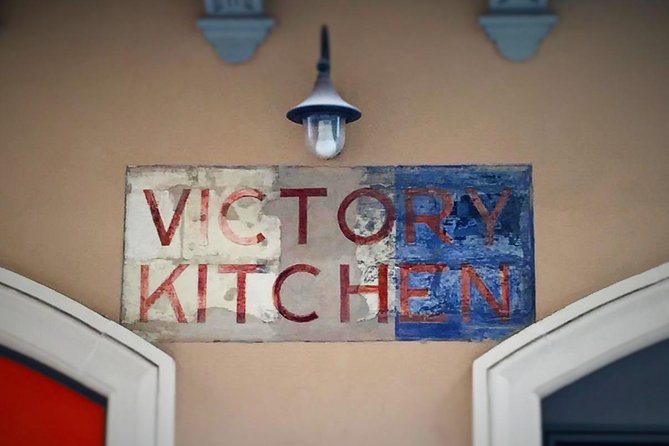
- Victory Kitchens and shelter tunnels: Go beyond military dates to understand how people ate, sheltered, and kept daily life going.
- A private three-hour format: Your guide can adjust the pace and answer questions without a large group slowing the conversation.
- Fort St Elmo’s museum visit: The route ends with exhibits, audio-visual material, and Malta’s 1942 George Cross.
Why Valletta makes a strong WWII classroom
Valletta can look like a city of grand churches, Knights-era buildings, and honey-colored stone. On this walk, you see how that same compact city became a target during World War II.
Malta’s wartime position mattered because the island sat between Europe and North Africa. After Italy declared war in 1940, Malta became an important base and a target for Axis forces trying to protect supply lines and support operations in North Africa.
The bombing was not a short episode. From 1940 through 1942, the island endured repeated attacks, supply shortages, and pressure aimed at forcing the population to surrender. The tour gives you the military setting, but its best subject is also the civilian experience.
That balance matters. You do not simply hear a list of battles and dates. You learn how people sheltered underground, found food, adapted to life under attack, and carried on while ships struggled to reach the island.
Other guided walks around Malta:
- The Original Valletta Walking Tour
★ 5.0 · 2,719 reviews - Valletta: 3-Hour Walking Tour
★ 4.7 · 1,605 reviews - Valletta: Guided City Walking Tour
★ 4.8 · 1,256 reviews
Beginning at Valletta’s gates
The walk starts in central Valletta, with the stated meeting location listed as Victoria Gate and the itinerary beginning at Valletta City Gate. Because the supplied meeting details also refer to different central Valletta locations, check the exact point shown on your confirmation before setting out.
This is a useful place to begin because Valletta’s gates give you an immediate sense of the city’s compact layout. From here, the guide can set the wartime story within the older fabric of the capital rather than treating World War II as an isolated museum subject.
The first part of the walk is outdoors. You move through Valletta’s streets and toward the harbor, stopping at locations connected with the siege and its aftermath. There is no hotel pickup or drop-off, so you need to reach central Valletta on your own.
Seeing the city through wartime damage
One of the most memorable stops is the Royal Opera House. The building was destroyed during a German bombing raid in 1942, and its ruined shell remains a stark reminder that Valletta was not protected from modern warfare by its historic stone walls.
The Opera House helps make the story visual. Dates and aircraft names can blur together, but a damaged building in the middle of a functioning city is harder to forget. Your guide explains what happened and places the raid within the larger campaign against Malta.
You also hear about the Battle of Grand Harbour and the Illustrious Blitz. In 1941, Axis aircraft repeatedly attacked the HMS Illustrious, a British aircraft carrier in Valletta. The ship and harbor were important military targets, but the attacks also exposed the surrounding population to danger.
The tour includes memorials and commemorative statues along the way. These stops are not grand attractions in the usual sightseeing sense. Their value comes from the explanation attached to them. Without a guide, you could easily pass them without understanding what they mark.
The Siege Bell above the Grand Harbour
The Siege Bell Memorial is one of the route’s strongest scenic and historical stops. It overlooks the Grand Harbour, giving you a broad view while the guide explains the island’s survival during the siege.
This is where the military story and the human cost meet. Malta was attacked from the air and threatened by shortages at sea. Supply convoys were essential, and the San Marija Convoy is one of the key events covered during the walk.
The harbor view gives you a better sense of why Malta mattered. You can see the water routes that brought supplies and understand why control of the island affected the wider struggle around North Africa.
Bring water and sun protection. Much of the tour takes place outside, and the stone streets reflect heat. The guide can pause to discuss a site, but this is not a shaded sightseeing ride.
A few more things to do in Malta worth a look
- Private Boat Tour: Crystal Lagoon, Blue Lagoon, Comino and Gozo
★ 5.0 · 1,077 reviews - Gozo Full-Day Jeep Tour with Private Boat to Gozo & return
★ 4.5 · 1,048 reviews - Private Day Sailing Boat Charter
★ 5.0 · 662 reviews - Gozo Full-Day Quad Tour with Private Boat to Gozo & return
★ 4.5 · 627 reviews
Tunnels, shelters, and Victory Kitchens
The tour also explains the network of wartime tunnels beneath Valletta and the surrounding areas. These shelters were not decorative historic spaces. They gave residents somewhere to go when bombs fell, and they show how the city had to function under constant pressure.
Another valuable topic is the Victory Kitchens, which were set up to feed people. This detail shifts the focus away from generals and ships and toward the practical problems of daily survival.
I especially like this part of the experience because it answers the question that military tours sometimes overlook: how did ordinary people eat, sleep, work, and care for their families during the attacks?
The tour does not appear to include a full visit inside the Lascaris War Rooms or the War Headquarters Tunnels. Those sites may interest you, but they are separate attractions, so allow extra time if you want to visit them during your stay.
The walk to Fort St Elmo
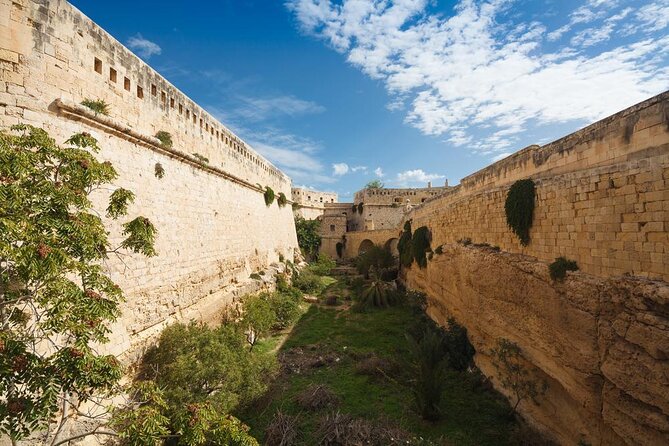
The route continues toward Fort St Elmo, at the tip of Valletta. The walk includes outdoor sections, uneven stone surfaces, uphill stretches, and some stairs. Several hours on this kind of pavement can be tiring, even for someone comfortable with normal city sightseeing.
Wear supportive shoes. This is one of the most useful pieces of advice for the tour, along with carrying water and sun lotion.
The pace can be adjusted in a private setting. One guide, Matthew, is praised for using a gentle pace and taking breaks at interesting locations. That matters if you want time for questions, photographs, and a clear explanation rather than a race from one stop to the next.
Still, the private format does not remove the physical demands. If your group has limited mobility, ask the operator about the walking route before booking.
Inside the National War Museum
The tour finishes with a guided visit to the National War Museum at Fort St Elmo. The museum ticket is not included in the tour price, so budget for that separately.
The museum gives the story a useful finish. Outside, you have seen the city, harbor, memorials, and damage. Inside, exhibits and audio-visual material help explain Malta’s military role, the struggle to bring supplies to the island, and the larger sequence of wartime events.
A major object is the 1942 George Cross awarded to the people of Malta for their courage. It is one of the clearest symbols of how the island’s wartime endurance was recognized.
The guide’s presence inside the museum is a real advantage. Matthew and Mario are both named as guides for this experience, and the strongest descriptions of the tour point to their ability to explain the important exhibits rather than leave you to wander without context.
Allow the museum portion to hold your attention. Although the advertised tour lasts about three hours, the museum itself takes roughly an hour within that schedule. If you are especially interested in military equipment, displays, and Malta’s supply problem, you may want additional time afterward.
How the private format changes the experience
This is a private tour for your group only, with a professional English-speaking guide. The price is $373.48 for up to four people.
The cost looks high for one person, but the calculation changes with group size. For four people, it works out to about $93 per person before the museum ticket. For two people, it is about $187 per person. That makes the tour much better value for a family or group of friends than for a solo visitor.
The private format is most useful if you have questions or a specific interest. You can ask about the Royal Navy, Malta’s role in the North African campaign, family connections, the Knights of Malta, or the city’s older history. The guide can give more time to subjects that matter to you.
The tour also suits a short stay. One person used it during an eight-hour cruise stop and found the meeting point within walking distance of the ship. Even so, you should allow time to reach the start, complete the three-hour walk, visit the museum, and return to your ship. The tour does not include transport.
The guides and their approach
Matthew is repeatedly singled out for his passion for Malta and World War II. He is described as personable, thorough, and able to connect the war to Malta’s history from the 1500s onward. That wider context is helpful because the island’s identity was shaped long before 1940.
Mario brings a different strength. He is a retired Maltese history teacher and can add family-based understanding of life during the war. He is also described as flexible, friendly, and good at answering questions.
Guide assignments can vary, so do not assume you will receive a particular guide unless the operator confirms it. Both Matthew and Mario are associated with the experience, and the tour depends heavily on the guide’s storytelling.
That is both a strength and a consideration. A good guide can make the ruined Opera House, a harbor view, or a memorial meaningful. The experience is less about entering a long list of major attractions and more about having someone explain what you are seeing.
Price, timing, and practical fit
The tour runs for about three hours and is offered in English. It is usually booked well ahead, with an average booking time of 29 days in advance. If your Malta dates are fixed, booking early is sensible.
Confirmation is sent within 48 hours, subject to availability. The activity cannot be refunded or changed after booking, so check your date, group size, meeting point, and walking ability first.
You need a moderate level of physical fitness. Expect to walk outside for most of the experience, including on hard stone, hills, and stairs. Comfortable shoes, water, and sun protection are basic equipment here, not optional extras.
The museum admission is extra. The private guide, however, is included, and that guide is central to the value of the tour.
Who should book this Valletta WWII walk?
I would choose this experience if World War II is a main reason you are visiting Malta, or if you want more than a general city walk. It is also a good fit if you prefer asking questions and moving at a measured pace rather than joining a large group.
It works especially well for:
- Couples or families who can share the private group price
- People with a strong interest in the Siege of Malta
- Cruise passengers with several hours in Valletta
- Anyone who wants military history linked to civilian life
- Visitors who appreciate a guide inside a museum, not just outside it
I would think twice if you dislike walking on stone streets, struggle with hills or stairs, or want a tour packed with indoor attractions. The city sights are important, but several stops are memorials, viewpoints, and places explained from the street rather than large visitor attractions.
Should you book it?
Book this tour if you want Malta’s World War II story told as a connected human story, not just a sequence of battles. The combination of the Royal Opera House ruins, Siege Bell, wartime shelters, Victory Kitchens, harbor views, and Fort St Elmo gives you a clear sense of what the siege meant to the people living through it.
The price is easiest to justify for three or four people. Add the museum ticket and prepare for a demanding walk, but expect strong personal attention and plenty of time for questions. If you are a history enthusiast with comfortable shoes, this is one of the better focused ways to understand Valletta’s wartime role.
FAQ
How long is the Valletta World War II private walking tour?
The tour lasts approximately three hours.
Where does the tour start?
The supplied tour details identify the start as central Valletta, with Victoria Gate and Valletta City Gate listed. Confirm the exact meeting point after booking.
Where does the tour finish?
The tour ends at Fort St Elmo and the National War Museum on Mediterranean Street in Valletta.
Is the National War Museum ticket included?
No. Admission to the National War Museum is not included in the tour price.
Is this a private tour?
Yes. Only your group participates, with a professional private guide.
What language is the tour offered in?
The tour is offered in English.
What World War II sites are covered?
The route includes the ruined Royal Opera House, the Siege Bell Memorial, wartime memorials, Valletta’s shelter tunnels, Victory Kitchens, and Fort St Elmo’s National War Museum.
Does the tour include hotel pickup and drop-off?
No. Hotel pickup and drop-off are not included.
How physically demanding is the walk?
You should have a moderate level of physical fitness. The route includes outdoor walking on hard stone, uphill sections, and stairs.
Who are the guides?
Matthew and Mario are named guides associated with the experience. Guide assignment may vary.
Can the tour be canceled or changed for a refund?
No. The experience is non-refundable and cannot be changed after booking.
Just added in Malta
- World War II Malta Full-Day Walking Tour★ 4.3 · 18 reviews
- Gozo: Wine Tasting and Paired Dinner Experience★ 4.9 · 43 reviews
- Victoria, Gozo: Sunset Walking Food and Drink Tour★ 5.0 · 6 reviews
- Wakeboarding Adventure in Malta: Learn to Ride★ 5.0 · 4 reviews
- Malta: 5 hr Vintage Bus Tour – Mdina & Blue Grotto inc. food★ 5.0 · 22 reviews
- Valletta Street Food & History Tour With Private Transfers★ 4.5 · 15 reviews
- Valletta: Private Maltese Cuisine Walking Tour★ 4.8 · 8 reviews
- Valletta: Private Massage from a world renowned masseuse★ 4.6 · 9 reviews
Walking Tours, compared.

Guided Walking Tour with Optional Cathedral Tour
Read our review →
Browse the lists this tour appears in